Thank you for visiting this page. My new (and improved) blog BirthRitesAnthro can now be found at: http://birthritesanthro.wordpress.com/ where I shall be writing about all things #birthrites, (M)otherhood, repro health issues and anthropology stuff in general. Do call by!
This site will stay live as an archive of my older material
Tuesday, 22 July 2014
Thursday, 22 August 2013
Motherhood in the Field: Arrivals and Departures
"...a central point of fieldwork - to just load upon experience and let yourself slowly sort it out at levels conscious and un-."
The months are flying by and the arrival (and subsequent departure) of my husband and son in the field has definitely been one of the most challenging aspects to this adventure so far. A mixture of new baby heaven and all the emotions that go with it, a full house from two to five in a matter of days and a family reunited after two months of separation. This could have been a disaster, turning everything upside down just as my data collection was gaining pace and my informant relationships developing. It was in fact the opposite ... it changed the way I look at my research questions and gave me a completely different perspective on maternal subjectivities. It also reminded me of a crucial aspect I had up to this point been ignoring - the paternal perspective on motherhood and child rearing. An obvious yet easily lost perspective in a fieldsite with highly gendered spaces. Having my husband here, himself once a local boy increased my limited opportunity to be reminded of how people here shape fatherhood and men's role in child rearing and decision making.
This of course I have realised upon reflection and a re-reading of my field notes made during those two very short months, I keep a kind of personal reflective diary as well as an ethnographic description diary which is proving very useful. Living it at the time felt like a different reality family life became increasingly distracting and I constantly worried about opportunities I may be missing out on, or reading time I would never get back. There was an emotional pull of putting work off in order to take advantage of the boys and lap up every moment of my son's presence. Things began to get harder as their visit came to a close and I worried (as my previous post demonstrates) on how I would cope in there absence.
Saying goodbye a second time around has been horrible and unsettling for us all, it really made me reassess my priorities - PhD or Family - it felt like a battle between the two. I realise now that it is not so clear cut and there are ways to make them of equal importance in a practical sense. It might seem strange to put my academic and career development on a par with my family but no-one quite prepares you for the emotional and physical strain of...well....either one and in that sense they are very similar. Being a mother and a wife influences who I am as a human being, but so does my study. This experience is teaching me a lot about myself and the strength of my relationships and in turn is giving me an insight into the lives I study that would never have happened if my own family life hadn't been turned upside down in order to make it happen.
Labels:
emotional intellect,
ethnography,
family,
fieldwork,
motherhood
Monday, 12 August 2013
Newsflash: Breasts are for feeding babies with!
I wanted to
take a break in the current usual proceedings of reflecting upon my time in the
field as a mother and to write about a more 'in the news' topic. There has been
a week of virtual and physical world activity in support of Breastfeeding. I
picked up on a record attempt in the UK for the most women (and babies I
assume) breastfeeding simultaneously and a surge of campaigning and images
in social media promoting support for all mothers in the practice of feeding
one's baby with one's breast (novel idea, its bound to catch on!).
I am at once
overjoyed by the amount of beautiful images splayed across the internet of
babes happily latched onto their mothers and also annoyed at the fact a week in
the year needs devoting to highlight the support needed for said mothers. At
risk of stating the obvious, breasts are for feeding babies with, that is why women have them, any
other socially constructed benefit such as the beauty of them, their sexual
attractiveness, the invention of special cloth devices to put them in and their
marketability to entice heterosexual men to buy anything is merely an added
extra. Though in some societies they seem to have got that the wrong way round
and even more so have turned them into a weapon of offence in a feeding
situation.
I find the
whole situation very odd, I'm sure my baby if she could enter into the debate,
would be inclined to agree. That of course is my gut reaction to a world of
silly rules, but by thinking anthropologically I
can think of some more rational explications to this breast utility obsession. What exactly is it about the human condition that throughout time and
place we change the way we relate to our bodies and what they do? For what purpose does it serve to treat breasts as something other than a source of (emotional and physical) survival for a human infant? Whether we choose to use them for that purpose is a separate argument, put ultimately that is why they are there.
For some cultural comparison here is a brief ethnographic vignette taken from my fieldwork diary:
When I boarded the combi* this morning I wished it was possible to take a snapshot of the scene that greeted me. Apart from myself with nuzzling babe in arms there are four other women of varying ages from late teen to 30s (as usual at this time the combi was populated only by women going about daily business) all nursing babes or toddlers. As we chatted about the recent thunderstorms, how busy the city centre had become etc. no-one batted an eyelid at the amount of breasts on show, as they never do because if you have a baby or small child who is pining at your chest then you feed it - why wouldn't you?
*A combi is a micro-bus/van with seating that is used as public transport around the city.
That is what I would describe as a healthy social attitude to feeding one's young. This was by no means a special day and justified by a female only presence, it happens on any day regardless of the gender mix. People of any age and gender will stop and talk to you, kiss and coo at the baby without any hesitation about it being attached to a nipple. Here feeding is not a shameful or secret event and nor are women accused of 'making a point', they are simply feeding their child whether it be on public transport, in the workplace, at home or walking down the street (a skill to be valued in itself!).
Mexico has a stereotype of machismo and of treating women poorly, and I certainly do not dispute the aspects of violence, maltreatment and appalling incidents of feminicide that occur. But lets get beyond the sweeping generalisations to turn the focus back on a so-called civilized and developed society such as the UK.
Capitalism and Patriarchy Come Hand in Hand
The societies most offended by a woman using her body to ensure the
survival of her baby are the most technologically and economically advanced, or
that is to say are the most technologically and economically dominant. There
has been a long tradition in feminist anthropology and social theory that
questions the use of technology as a means of population control (for an
introduction see Emily Martin for a distinct analysis of obstetrics and
authoritative anatomy knowledge and Vanessa Maher (ed) for a collection of writings on
breastfeeding). Population control in the theoretical sense involves the
manipulation of social thought (common sense) and bodies for the common
economic good of a nation - or for those that govern the nation. What economic purpose is served by controlling how a growing population is fed? Maybe that is one for the formula companies to answer!
From a feminist perspective I would argue that much has to do with the destructive illusion that gender equality is about making women more like men rather than acknowledging that biological difference is a strength particularly in terms of life creation and survival. Women are 'freed up' to enter back into the workplace and therefore should feel liberated about the choice of bottle feeding over breast. This....as opposed to the workplace adapting to the needs of a breastfeeding woman is the type of situation that makes breastfeeding an issue that then needs dealing with. Laws and policies must be devised and rights defended in order to ensure some smokescreen of equality in what is essentially a patriarchal work-space. Only in the most advanced capitalist societies do organisations need to create a policy for breastfeeding because in those societies women's bodies really are commodified and sexualised to a point where people have forgotten what breasts are for. And those that remember have to work hard to defend what is seen as a radical standpoint and feeding one's child becomes a Right rather than a normal bodily function...what a topsy-turvy world we live in!
Tuesday, 21 May 2013
Motherhood, birth and hormones in the Field: a reflection
A few weeks have passed by, a new life has left my womb and come
to bless our family and the remainder of my small family unit has arrived
(post-birth) to join me I the field. Theoretically it is my planned break in
work activities and time to spend recovering from pregnancy and birth and
bonding with my loved ones. I have longed for two months to see my husband and
son again yet at the same time was apprehensive about how it would make me
feel.
We are now a family group of 5 in the field site, I am two
weeks postpartum and myself and new baby have not left the house since the
birth. She is 100% healthy, feeds and sleeps well and therefore leaves me with
time to reflect (and worry) about my work and period in the field, especially
when the school run is taking place and everyone else is out of the house for a
few hours. One could almost say I have too much time think, or in fact that I
just think too much..fin!
I became so engrossed in my data collection during those
first couple of months partly because it was going so well since our move to
this house and partly because I was worried about not functioning well
postpartum and everything generally going a bit wobbly. I also looked forward
to taking a month off and being absorbed by family. Needless to say this has
not happened. I had a very quick and simple (and exhilarating) birth leaving me
physically in excellent condition and really I should know myself better by
now! The truth is I can’t switch off completely no matter how hard I try, so I
figure it is better not to try. Instead I’m worrying about the data I’m missing
out on whilst in the house and the practicalities of what need to be achieved
whilst I have some help around and also afterwards.
Whilst I’m doing my usual and unavoidable ‘getting on with
it’ I’m managing an interesting emotional state – a combination of postpartum
hormone cocktail and the closeness of having the family back together again. I
had no idea actually how much I had missed the boys until they arrived and now
it feels very clear just how much I have, do and will miss them. I also had no
idea how much I missed my home and daily life. The old saying ‘out of sight,
out of mind’ appears to ring true here and now these emotions are coming back
to bite me on the bottom! I am also fighting at the same time with a will to carry
on working and not neglecting my data collection. It feels very much like the struggle between
family/work/study/life balance that I face at home, only here there’s the added
bonus of sunshine and exaggerated hormones.
I was helped very much yesterday by reading THIS article published
a couple of years ago in Anthropology Matters. The paper consists of a
discussion of the problems faced by Phd students who were carrying out anthropological
fieldwork for extended periods (generally around 1yr). It definitely made me
feel better about my own situation (taking comfort in other people’s misery!)
and made me realise that I’m not doing too bad. I have been struggling with a
decision about cutting my fieldwork period short and trying to figure out just
how much data is enough for my thesis. This kind of thinking is based purely on
my emotional reaction to the family being together again, though I don’t think
there’s anything wrong in that. My Phd at the end of the day is a purely
individual goal that admittedly is all about me and what I can achieve in my
student and academic career. My family is about our collective unit and love,
not too difficult to figure out what should take precedent! Or is it? Like many
a ‘modern lady’ (sarcasm italics) I
would actually like to have it all, though this appears to come with a price
that leaves me in a constant state of emotional, psychological and physical
compromise – very close to what I’m actually here to study in other women.
I have a deep concern about how much data is enough and what
kind of quality it needs to be in order to achieve a fabulous doctorate thesis,
but I am just as concerned about the ongoing affect this is having on my family
unit and the overwhelming feeling that I just want to be at home curled up on
the sofa with my babies reading their favourite stories and just being
together.
Labels:
anthropology,
chiapas,
ethnography,
fieldwork,
homesick,
motherhood
Saturday, 6 April 2013
Motherhood in the Field: "Mummy I want to go home"....
Coming up to about a month of our 10 month residence in the ethnographic field and last night I heard the words I have been dreading "Mummy I don't want to be in Mexico any more, I want to go home". If anything I'm surprised it took this long, though my eldest has always been sensitive to what's going on around her and is not likely to blurt this out at any given moment. I have to say I envy a child's ability to be honest with themselves and those surrounding them, in reality she was only echoing what I have often felt on the inside during this first month.
So far we have had arguments with landlords and house moves, infestations of head lice, regretful, unplanned trips to the jungle (long story!), occasional vomiting, over tiredness, insomnia and a spattering of general wobbling of confidence in what I'm here to achieve - and that's just me!
Having been witness to all this and only once have uttered the 'going home' words, (which to add context were said as an over-tired, outplayed four year old was refusing to put her own pyjamas on) before promptly falling fast asleep, has actually left me feeling immensely proud of eldest daughter and amazed at her adaptation skills.After spending a sleepless night worrying about my response/plan to these dreaded words, there was no mention of it the next morning as she happily chatted on about her plans for play that day. She appears to be coping with this whole fieldwork thing much better then me!
A positive house move to a neighbourhood where other children are at hand to play with and impending starting of pre-school have certainly helped smooth over this initial period. From my workload point of view it also allows me to stop pressurising myself into intense data collection as I will very soon have a short period of 5 child free hours a day to occupy myself with and a more defined 'work day'. I've never been a outspoken fan of routine, however, bringing a child into the field has forced me to have a structured routine that is beneficial to data collection.
Pregnant belly and chatty four year old are also proving beneficial in the legitimising myself in surroundings and with informants arena. It's become quite useful when attached daughter begins most conversations for you, being an apprentice in the field one has much to learn about how children engage strangers in conversation and abstract useful information. So much so I'm beginning to wonder whether I can continue in her absence whilst she's at school!!
On a poignant note, coming to observe motherhood in a place where motherhood is everywhere and in most aspects a very social event. Where women work with babies or small children attached to them, where daily tasks are carried out and life goes on without a severe separation of activity and mothering spaces it allows me to reflect upon the fact that I have half my child stock here with me and will continue to do whilst I work and study for a doctorate degree. If anything, I am questioned here as to why I would leave another child behind - quite different to the conversations I had in the UK about why I would possibly want to bring a child with me.
The emotional strain of leaving one child behind was something that I expected to struggle with, though it appears, as with my daughter that my son is adapting quite well to my skype presence and seemingly a less outwardly affected than I at our separation. The next challenge will be when we all come together in month's time and then have to separate again - with the addition of a new baby. The fear of not knowing how this will all pan out is driving my data collection each day and helping me maintain focus. I do wonder that without this added pressure what stage I would currently be at now...probably still looking for a cheaper, more comfortable house!
Labels:
anthropology,
childhood,
ethnography,
fieldwork,
motherhood
Monday, 11 March 2013
motherhood in the field: Separation and Arrival
The challenge has begun (on a matter of principle I refuse to use the word 'journey'!). In the early hours of this morning my four year old and I waved hasta luego to my husband and three year old son and began our journey to Mexico (aptly we left on mother's day). We will be apart for the next 2 months when they will come over to visit, in time for birthdays and await the birth of our third child. After that we shall become fragmented once more for four months. Already this gives me a deadline to work towards as I try to plan what aspects of fieldwork I can fit in within the next two months, whilst at the same time settling my four year old into her new surroundings, the last trimester of pregnancy and dealing with the temporary separation of our family.
I am aware that this preliminary post is sounding rather balanced and sensible. It must be noted that as I write I am only halfway through travelling to the fieldsite and having set off at some ungodly hour this morning am actually far too tired to think or feel the gravity of the situation. Less than 24 hours since we said our hasta luegos I am yet able to comprehend the emotions of leaving one of my children and partner behind.
I received some interesting comments and tweets after my last post relating to the topic of parenthood in the field and the work/motherhood balance in general. A consensus amongst many was the idea that fieldwork could/should be done for short periods and that finding a time to parent would be difficult. This did make me reflect on the perspective of my children and how appropriate it was to bring them into the field, but this was constantly outweighed by the acceptance of my chosen discipline of anthropology and desire to complete an in depth ethnography of my subject in question. Although compromise is the key to most things in life (most definitely concerning parenthood!) I am quite confident in defending the point that my field data would itself be compromised (and not in a positive way) if I didn't commit to a substantialy lengthy period. Wanting to understand pregnant and maternal subjectivities at least deserves one to be around for the gestation of the phenomenon. A field context is important here, my acompanying child and growing fetus are along for the ride for various practical (and biological) reasons. I want to understand motherhood and pregnant bodies in a Mexican context so I don't see too much problem with bringing my own bodily accessories into the fieldsite. Who knows, it may even result in an advantage...I'm sure my children will be the judge of that!
Labels:
anthropology,
fieldwork,
mexico,
motherhood,
separation
Tuesday, 26 February 2013
Motherhood in the Field : a new thread
I am about to embark on a years worth of anthropological fieldwork into social pregnancy and maternal subjectivities. It is my aim to spend the next 10 months 'hanging out' with pregnant women and their families, midwives and other health professionals and generally anyone who can stand my presence and questions for a long period of time!
In preparation for the field I have learnt much about interview techniques, fading into the background (or not!), the effect of the researcher on the fieldsite, best way to take notes etc. but little about the specific aspects of my own life that cannot be suspended in animation whilst I go about my field life.

MOST NOTABLY MY FAMILY...
I have found noted in odd ethnographies and papers where anthropologists have noted the presence of their children (Sheper-Hughes in Death Without Weeping, Gutmann in The Meanings of Macho), some reflections/mentions of pregnancy in the field (Rapp in Testing Women, Testing the Fetus , Ivry in Embodying Culture) and nothing so far on leaving one's small children behind to go into the field (though I am happy to stand corrected). I have come to conclusion that like much ethnographic fieldwork mysteries it must come to to initiation and guarded experience. Arguably if ethnography is to be a reflexive practice there needs to be a space for discussing such experience - it is either woefully lacking or I have failed to find it.
I have decided to treat my posts here over the next year as a thread for my field experience and its clashes/coincidences with motherhood. This way such reflections may stay out of my confidential field notes and I will have a space to reflect upon myself and hopefully open up a discussion space for all parent anthropologists to contribute.
OVER THE NEXT YEAR I SHALL EXPERIENCE THE FOLLOWING (in my personal life as mum, wife and woman): Being accompanied in the field by a small child; leaving another small child and husband at home for the duration; being pregnant with third child; birthing said third child and continuing in the field.
Have I gone mad?? Is a question on the lips of many..Is it ethical/moral to separate one's young family in the name of fieldwork and what right do I have to do so? I have been asked and have asked myself many of the same and similar questions HOWEVER, as is the concern of many a fledgling academic - as much as I love to theorise about the cultural construction of the human body, my womb does have a shelf life; women have to fight hard in academia to achieve their goals and qualifications; I live under the illusion that if we can't have it all we can at least try; although I struggle to find published evidence I surely am not the first woman (or parent) to be in this situation.
Crash, burn or be successful...only experience will prove my resilience and that of my family!
In preparation for the field I have learnt much about interview techniques, fading into the background (or not!), the effect of the researcher on the fieldsite, best way to take notes etc. but little about the specific aspects of my own life that cannot be suspended in animation whilst I go about my field life.
MOST NOTABLY MY FAMILY...
I have found noted in odd ethnographies and papers where anthropologists have noted the presence of their children (Sheper-Hughes in Death Without Weeping, Gutmann in The Meanings of Macho), some reflections/mentions of pregnancy in the field (Rapp in Testing Women, Testing the Fetus , Ivry in Embodying Culture) and nothing so far on leaving one's small children behind to go into the field (though I am happy to stand corrected). I have come to conclusion that like much ethnographic fieldwork mysteries it must come to to initiation and guarded experience. Arguably if ethnography is to be a reflexive practice there needs to be a space for discussing such experience - it is either woefully lacking or I have failed to find it.
I have decided to treat my posts here over the next year as a thread for my field experience and its clashes/coincidences with motherhood. This way such reflections may stay out of my confidential field notes and I will have a space to reflect upon myself and hopefully open up a discussion space for all parent anthropologists to contribute.
OVER THE NEXT YEAR I SHALL EXPERIENCE THE FOLLOWING (in my personal life as mum, wife and woman): Being accompanied in the field by a small child; leaving another small child and husband at home for the duration; being pregnant with third child; birthing said third child and continuing in the field.
Have I gone mad?? Is a question on the lips of many..Is it ethical/moral to separate one's young family in the name of fieldwork and what right do I have to do so? I have been asked and have asked myself many of the same and similar questions HOWEVER, as is the concern of many a fledgling academic - as much as I love to theorise about the cultural construction of the human body, my womb does have a shelf life; women have to fight hard in academia to achieve their goals and qualifications; I live under the illusion that if we can't have it all we can at least try; although I struggle to find published evidence I surely am not the first woman (or parent) to be in this situation.
Crash, burn or be successful...only experience will prove my resilience and that of my family!
Labels:
anthropology,
ethnography,
fieldwork,
motherhood,
parenthood,
pregnancy
Wednesday, 23 January 2013
Why I understand my Pregnancy and Birth Choices as Political Action
Whether by nature or by constructive design I am a feminist
in every way that I understand feminism to mean. Whilst I happily debate with
many and often myself about the historical inclusionary, exclusionary and
culturally specific aspects of feminist thinking, I have always stood in
agreement with one traditional argument – there is no separation between the
personal and the political, my personal is public and everything about it is intensely
political.
It all comes down to the intriguing concept of ‘choice’, I
am never one to take semantics lightly particularly concerning this word and
its array of meanings in the English language. The moment I make a choice I am practicing conscious
action based upon my political beliefs and feelings as a woman, in whatever
environment I am in at that time. I am fully aware that such choice making is a privilege given to me
by my social position and geographical location in the world, dependent upon my
access to varied knowledge sources, freedom to act and speak without physical
or legal repression and the influence of the hundreds of women dead, alive and
yet to be born whom I take inspiration from.
Knowledge (or stuff and info), lived experience and
emotional memory drive the choices I make; I would admit the latter dominates
whether consciously or not. It has taken until my third pregnancy to reflect
upon the politics in my personal reproductive choices and behaviour and until
now to construct the confidence needed to defend myself against a status quo of a medicalised appropriation of women's bodies.
At 36, female bodily experience and the immense surge of
power I feel when with foetus has finally led me to be proud, confident and
happy about the choices I am making for the life of my womb and its contents, due to physically separate at birth. My studies have led me recently into the
realms of foetal subjectivities that are at once fascinating and mind blowing.
I have become seduced by the writings of French philosopher Julia Kristeva who
attempts to find ways of explaining what may or may not begin in the womb, from
the moment of conception: or what she so eloquently names the semiotic chora – the poetry of the
pre-lingual. I find it nourishing to think about how my actions now may
impact on the formation of the new human currently growing from my body, I also
love the ideas of social scientist Barbara Duden who writes in her book Disembodying Women of the foetus as an astronaut
who travels the length of the female body, influencing every aspect of it and
societies claims upon its vessel. It is this literature that reminds me every
day that choice is political practice and should never be taken for granted.
I am proud to say that I have denied registering my
pregnancy with my GP and state maternity care; I have researched and hired an
independent midwife who pops by only upon my request and chats without laying a
finger on my body and who trusts me to know my own body; I have chosen no external
interventions such as ultrasound, urine and blood testing; I am returning to
the place and people where I feel emotionally drawn to birth; and most
importantly I am taking full
responsibility for my pregnancy and birth decisions because I choose to do so
including any consequences that come along with that responsibility.
I understand my decisions as no better or worse than any
other pregnant woman, I am doing what I feel is the correct, political thing to
do based upon who I am and how I understand it is to be a woman. Even in the
most life affirming, sensitive, beautiful and painful moments of my life I
cannot deny that politics creates the situation I and my children are in.
Thursday, 4 October 2012
No you can't choose your midwife but you can choose a caesarean!
If I were to explain that within six months you would no longer be able to choose a midwife who you and you family could build up a relationship with over 9 months, have a home birth without uniforms and bizzare multi-presence protocol and not be pressured into sonograms you don't need and a birth plan that has your wishes at the centre, you may wonder: "Did I ever have this choice in the first place?" ...
Yes, it is actually possible to birth outside of the NHS and no they didn't invent it! There has always been this choice in the UK, independent midwives (IMs) have worked before, during and after the NHS and state manipulation of midwifery and have provided individual woman centred care for ..well I could say centuries, but to be more exact since time began! Women have always had the option to opt-out of the system and hire (its not as expensive as you would think and therefore not just the reserve of the middle classes as is it is often viewed) a woman to support them during the pregnancy, birth and post natal period. IMs have lovingly dealt with all aspects of fear, trauma, post-natal depression etc. and do so by providing as much time as you need, not a 5 minute slot in an over-run surgery.
Until now that is, independent midwifery (IM) in the UK has been serious threat for around 5 years or so. I won't go into the legislative attack on IMs in this post, much better detail can be found by clicking in this link and also a brief search on the net. But lets say in short that by 2013, unless they work for a supporting company who can provide funding for exorbitant insurance fees rising over the price that any individual could afford (around £80,000 and rising) then its bye bye birthing practice. Their only choice (ahem!) is to join the ranks of the uniformed NHS and do it their way. Nice strategy government body people to populate a dwindling NHS profession - force IMs into your service!! Without that IMs can work as doulas, a noble art and invaluable role to all women and families - but invaluable as support to woman and midwife. It's basically saying "look we know you're qualified, have many years of experience and are more caring than any nameless institutional drone will ever be BUT you just have to watch and you don't get to say when!" Strangely enough a bit like NHS midwives when an obstetrician enters the labour room!
Now before I get too carried away, I wanted to write this post not so much from my usual activist and anthropologist view (although they'll get in there somewhere!), but from a woman and mother's point of view. I write a lot about the problems in Chiapas and Mexico and feel strongly about the treatment of women there, however, I also take great pride in having lived there, married there and started my family there - with the subjective freedom to search out and identify the support and services that I needed. I gave birth to my second child in the UK and although there are just as many stories to the contrary as to support mine - I NEVER WOULD AGAIN if left to the mercy of a public system that has no respect for the divine wisdom and magic of original midwifery. No matter where I am in the world as a woman I know my own body and I know its limits. As a mother I trust in myself and my baby to find our way through together and to listen to what we are thinking/feeling/doing. Whether in a challenged, post-colonial economy or a fucked up British one I feel it should the right of any woman to seek her own education about reproduction, birth, abortion and make her own decisions about what happens with her own body. It should be the right of any woman to birth the next generation in a safe environment with those she loves and respects close by and no stranger touching her who doesn't even bother to ask her, her name.
The current system in the UK is striving to offer women more choice (ahem!) birthing centres next to hospitals, elective caesarean, perhaps a home birth if you, your baby, your home meet the criteria. Whilst activists for reproductive rights are fighting for the right to choose (ahem!) interventions and surgery on the basis that no-one should suffer in modern day (without considering that if most pregnancies and births are taken out of a pathological model and medical birthing environment the 'suffering' would not so much be an issue).
So reading between the political spin and woeful lack of media coverage (as expected on women's health issues) you can shortly feel free to elect for surgical interventions that can lead to long term complications, problems with breast feeding, institutional challenges to follow-up vaginal birth, drugs in yours and your baby's system a big fat scar and an obstetrician who doesn't know your name but may charge you a small fortune when they eventually kill off maternity services from the NHS. BUT YOU CAN NOT FEEL FREE TO choose whom you wish to attend you based on whether you like their personality and approach to pregnancy, get to know your midwife and they you and your family over 9 months, decide where you really want to bring your baby into the world and receive support that enables you to feel empowered and in control of your reproductive destiny so that suffering is not a concept (managing pain yes, suffering no). On rare occasions you may fall into an NHS postcode that supports this type of midwifery practice in the system, but that's not a choice (ahem!) its the luck of the draw - lucky you!
Midwives are amazing and many in the system are just as amazing as those outside it, but here in my country of origin I don't get to decide any more which one I want to allow into the most personal, naked, precious moment of my life and I am no longer able to say please don't put your fingers inside my vagina stranger person as I do not wish to have an internal examination if you show me I can do it myself......quite frankly that sucks!
Wednesday, 1 August 2012
Death Threats, State Violence = Bad Reproductive Health Care
My response to this short online news piece in relation to violent societies appears below in English:
México: Exigen protección para periodista Lydia Cacho
El Comité para la Protección de Periodistas se manifestó sobre las nuevas amenazas de muerte que la periodista y defensora de derechos humanos Lydia Cacho recibió el pasado 28 de julio debido a su labor informativa.
El CPJ pidió a las autoridades mexicanas investigar esta nueva amenaza y solicitó protección para la periodista, señaló el diario El Informador.
Cacho se encontraba escribiendo en su estudio cuando recibió la advertencia: “No te metas con nosotros o te vamos a mandar a casa en pedacitos”.
El mensaje fue filtrado a través del sistema de radiocomunicación instalado en su casa en Cancún, informó la organización.
La Comisión Interamericana de Derechos Humanos (CIDH), en 2009, otorgó medidas cautelares a la periodista tras darse a conocer varios actos de vigilancia e intimidación por parte de hombres armados.
Article19 también hizo un llamado al Estado mexicano para que se hagan efectivas las medidas dispuestas por la CIDH para proteger a la periodista.
Según Article 19, Lydia Cacho ya se encuentra a salvo fuera de la ciudad de Cancún.
-----------------------------------------------------------------------------------------------
Apart from highlighting the power of social media this news piece is just one amongst many that demonstrates the normalisation of violence in Mexican society. Sometimes I find it difficult to write about direct violence in Mexico and/or in Chiapas more specifically because I worry about being complicit to a polemic that can have negative results and stereotype a nation.
Although I am always aware of what can happen and have evidenced some violent and dramatic scenes during my time in Mexico, I have experienced love, community solidarity, trust and respect on just as many levels. I supposed this comes down what I have always written about Mexico - it is a country of mega extremities - when it is good it is amazing and when it is bad it is horrific. At least with that you always know where you are.
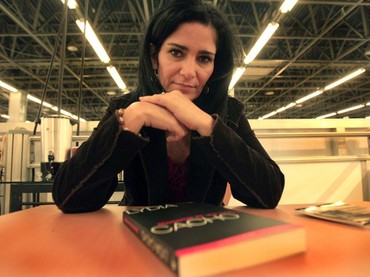
The article above is in relation to investigative journalist Lydia Cacho (@lydiacachosi) one of Mexico's most hard working, consistent and brave women who writes about and speaks out for women's rights and anti-corruption.
In brief she was kidnapped by public security and arrested in 2003 for writing articles and later a book called Los Demonios del Edén (The Demons of Eden) which included narratives of abused girls and named men involved in a paedophile ring. In 2006 she published a book on the impunity and femicide in Cuidad Juarez of which she continues to be very vocal today. And now according to reports she is being threatened again by not so brave cobardes who shout anonymous threats from hidden places.
The suspected involvement of local politicians and security forces on previous violations of her human rights to live unharmed and peacefully as any other citizen of the world must make it difficult to know who to trust. My ears always prick up at the mention these stories of journalists in danger in Mexico as this is the career my husband once chose, for which he too received threats and witnessed corruption on a regular basis - albeit on a smaller scale. I remember the BBC once reporting that Mexico was second to Iraq in being the most dangerous place in the world to be a journalist, I remember it most vividly because at that time I was back in the UK fearing that I might never see my life partner again. He lost faith in the world of journalism because of his junior experience and vowed never to return to it. It appears that as with everything in that amazingly, dramatic and lively country you are left to choose between extremes - be part of the corruption that only prints what the politicians and high end society tell you to or stand against it and have you and your family receive regular death threats and at worst be murdered.
I wrote and presented a paper at the end of 2011 about gendered violence and reproductive healthcare in Chiapas. In this paper I began to explore the notion of how high levels of violence in society reflected not high levels of structural violence but direct violence in reproductive healthcare settings. This was followed up earlier this year by another paper presented on Barcelona and a following article (all published in edited versions on this blog) on the impact of militarisation on gendered violence and reproductive health.
As disturbing as continued reports of violence, impunity and corruption in Mexico are in the world media are, they serve to remind me that hopefully I am not alone in thinking that part (though not all) of the catalysts behind the poor treatment of women during pregnancy and labour, and in health services in general, are connected to the wider violent actions (and acceptance) of a society.
A more important reason personally to pay attention to violence in Mexico, without sensationalising and demonising a nation is precisely because my extended family, children, friends and strangers that I have experience of cannot be further (in the extreme) from this phenomenon.
Sunday, 22 July 2012
Reviewing writings from the Past
Prompted by a recent Twitter thread I have published an edited version of my MA thesis on this blog (http://letterfromchiapas.blogspot.co.uk/p/archive-ma-writings-on-gender-and.html and also as a note on https://www.facebook.com/LetterFromChiapasBlog).
I wrote the original thesis entitled : Multiple Gender Identities of the Isthmus Zapotec and the Transition of the Household into a Neoliberal Mexico back in 2006. As well as the submission for my MA in Social Anthropology is was also intended as the project for my first attempt at gaining a PhD (which turned into a major disaster but that's for another time and place!).
Re-reading, editing and re-posting sections of this thesis has presented me with some opportunity for reflection. The original tweet thread from @icdad and @ThinkMexican reminded me of the months of thinking, reading and writing about the complexities of gender and sexuality constructions in Latin America I had done, that now seem a distant past. Just what happens to all that stuff we learn in our early academic and educational journey? Does it just get compartmentalised, archived in the memory banks until prompted by an external force to come to the fore again?
I wrote the original thesis entitled : Multiple Gender Identities of the Isthmus Zapotec and the Transition of the Household into a Neoliberal Mexico back in 2006. As well as the submission for my MA in Social Anthropology is was also intended as the project for my first attempt at gaining a PhD (which turned into a major disaster but that's for another time and place!).
![]() |
| Photo from http://www.azull.com |
Surely on many levels this previous knowledge hoard must inform my thinking and understanding of the world today? I just don't spend much time reflecting upon it.... I now realise that is a shame.
As well as a reminder of my first in depth anthropological thinking into gender and economy, reading this thesis has demonstrated en evolution in my writing. It's difficult to read academic work from the past, it makes me cringe - I admit to never revisiting my undergrad assignments - I don't think I have the stomach for it! Opinions and ideas without much substance is a polite way to describe my undergrad self... What I would probably now write on my own student's feedback as "This discussion has some potential, however..."
I think perhaps its a good idea to have a reunion with my past self every now again, catch up with how I arrived at my current state of being and maybe learn a few things about where I'm going!
Monday, 2 July 2012
If I could draw my PhD....
If I was able to express in art what I'm trying to do by analysing what is inside and how women feel it would look like this:
If only I could embody Salvador Dali that is!
![]() |
| Salvador Dali City of Drawers |
This last couple of weeks I've been trying to get to grips with pregnant embodiment via a multiple body analysis (using Lock and Scheper-Hughes' notion of Individual Body, Social Body and Body Politic). I'm finding that as with theories of embodiment themselves I am awash with mental imagery and physical feelings of what it is to embody a social (and cultural) idea of what reproducing is and what having an occupied womb feels like. What I'm finding most problematic is turning this into something tangible, that makes sense to those outside of my head who are given the task of deciphering what it is I'm trying to say.
Studying the humanities (or social science - when it comes to anthropology no-one can decide!) has introduced, rejuvenated and reaffirmed a love for artistic expression. I'm finally able to connect how humans have coped with a lack of the right words to describe how they feel - what they have done with a burning desire to express how they experience the world. Making me at once liberated and dismayed that no matter how much I would like to dance my way through a viva voce I will never be allowed.
I have discovered one saving grace though, the work of Julia Kristeva and her writings about poetic language and the semiotic chora (the pre-lingual subject in process). From what I can begin to understand is that she is willing to explore the pre-cultural human in the womb, ourselves before we become social selves. This entails trying to grasp what urges are and can be - if there is any chance that some part of us cannot be explained via the route of social construction.
I spend so much of my time thinking about how our every thought and feeling is manipulated by our surroundings and experiences - a very European approach to a world we have perhaps lost touch with, a spirituality that has been analysed away. Kristeva has bought something back for me, in a way given me permission to think through my own birth experiences and those of others. To be able to dig deep into other cultures and narratives that celebrate a female, maternal, real, connection to the earth - a way of metaphorically kicking off my shoes and feeling the earth or sand in between my toes. I can close my eyes and see liquid, blood, organs, space and what I imagine to be the collective wombs of women around the world, I can imagine myself swimming through dark, sticky red liquids that relate to womanhood and reproduction.
If I only I could find the right words......
Labels:
anthropology,
art,
birth rites,
Body,
Julia Kristeva,
maternity,
pregnancy,
pregnant embodiment
Sunday, 17 June 2012
Birth Story
BIRTH STORY: Ina May Gaskin and The Farm Midwives is racing toward the finish line with finishing costs mounting--seeking women and men who share our enthusiasm for what Ina May and the Farm Midwifery clinic have achieved in the last 40 years; since the 1970s these counterculture heroines have inspired hundreds of thousands of women to believe in their bodies’ natural ability to birth safely and beautifully. Today, with nearly one-third of all U.S. babies delivered via c-section, their knowledge and skills are more needed than ever.
This amazing film project has been put together by two women who describe themselves as "two filmmaking mothers who have been inspired by the important work of world-famous midwife Ina May Gaskin and her incredible colleagues. We've spent the last two and a half years juggling cameras, microphones, hard drives, preschool drop offs, nursing infants, pregnancy, editing schedules, babysitting schedules, American express bills, and vomiting four-year-olds"...
It seems to me that in 2012 we are really racing towards positive change and realisation of just how important respectful birth is and how we treat birth reflects how we are as a society as a whole ...
Saturday, 16 June 2012
Anthropology contributing to the World...
Here is a link to my latest post and part report on my sister blog from the RAI conference Anthropology in the World Conference in London: http://researchingsecurity.wordpress.com/our-publications/conference-papers/what-can-anthropologists-offer-to-security-studies/
I attended a great panel on anthropology's potential in the environment of security studies, this timed perfectly with the paper I've been writing (see previous June post) about the long term effect on conflict in Chiapas and reproductive health services. It also reaffirmed by belief in what ethnographic methods and anthropological theory can contribute to revealing the lived experience of people. Especially when all we get from projected media images are scenes of violence and fear to keep us away. It is often so easy to forget that individuals and families continue to live daily in these environments and continue to have the same food, shelter,water, employment, relationship issues that exist in places of relative peace. Collecting, representing and reflecting upon the stories of others reminds us to look beyond the situation to the people involved in it.
Saturday, 2 June 2012
Conflict and Reproductive Health in Chiapas, Mexico: disappearing the Midwife
This paper is currently under review (and this is a shortened version)...please contact me before referencing :).....
Women's voices are represented in this paper all names have been changed and all interviews/data collection occurred with informed consent.
Ooh and the footnotes are out of sync due to my own technical limitations.. but they are at least there!
As always comments greatly received!!
Women's voices are represented in this paper all names have been changed and all interviews/data collection occurred with informed consent.
Ooh and the footnotes are out of sync due to my own technical limitations.. but they are at least there!
As always comments greatly received!!
Keywords: Chiapas, militarization,
obstetric violence, bio-politics, urban midwifery
This paper aims to
demonstrate how the impact of low intensity armed conflict and associated structural
and direct violence in the Chiapas region is reflected in the interpretation of
reproductive health policy and practices, manifest in the treatment of women
during pregnancy and birth[1]. Drawing
upon critiques of neoliberal economic logic and bio-politics in the context of
Latin America this paper will analyse how policy in everyday life exposes
mechanisms where local practices and global forces impinge on the body. This
type of analysis illustrates the ‘body’ of the state and the ‘body’ of the
pregnant subject as entangled and inseparable. With this in mind I will also
propose the argument that current policy and obstetric practices not only
exacerbate gender inequalities in the society as a whole but also actively
promote the disappearance of midwifery practices in urban locations; a female
dominated and woman centred practice currently outside of state infrastructure.
Chiapas has been the focus of
intense development over the last decade, much of this work justifiably targets
rural areas that are most affected by severe economic and social inequalities
and most visibly affected by the ongoing conflict. It can be argued that little
work has been done in this area in terms of measuring the impact of the
militarisation and paramilitary violence that continues alongside the
development of targeted access to healthcare and cash transfer welfare programmes
in rural areas. It appears to be an effective strategy that by moving military
presence from the public eye, acknowledgement of the violence associated with
militarization is disappears with it.
The intention within this paper is to continue the well documented discussion
about the associations between conflict, State violence and reproductive health
inequalities in Chiapas, but move the focus from the rural to urban sites where
my research up to date suggests very little attention has been paid. This is
particularly true of informal and private health networks and midwives.
Intersections of Violence
In the wider context of Mexico a intersecting relationship can be
observed (in academic literature and media reporting) between neoliberal policy
violent States, militarization of urban cities of the north and high levels of
maternal and infant mortality, and also reproductive rights violations such as
unnecessary caesarean section rates, contraception or sterilization without
consent and refusal of legally approved abortion[1].
The aforementioned violations of reproductive rights are understood in context
with this paper as defining what I shall term as obstetric violence. As Jenkins
remarks, ‘the notion of violence is both much contested and multiplex in form’[2]. There
is no agreed definition across literature in a global context for violence
perpetrated by health or medical workers although it occurs under similar
social and structural conditions a cross-cultural definition of violence can be
problematic due to cultural perceptions of gender roles and bodies. It is
important for the purpose of this paper that obstetric violence - although a
problematic term in relation to much feminist discourse and anthropologies of
violence - is understood as specific to a type of gendered violence that
happens as a consequence of already existing, wider structural violence. In
both Latin American and Spanish literature and birth activism Violencia Obstetrica is a widely used
and accepted term describing acts and situations that relate to the
descriptions given by women and professionals in my own research.
Labelling aspects of legitimised health practices as violence could be
easily contested, but my experience in Chiapas has shown that line with
Castro’s work in Mexico City hospitals that: ‘for many women, a caesarean
section that could have been avoided is a violation of their bodily integrity,
just like having a routine episiotomy, epidural anesthesia without consent,
non-indicated oxytocin induction or augmentation, multiple and painful vaginal
examinations...[and] needless exposure of sexual parts in common labour
rooms...’ culminate in practices that can be defined as obstetric violence[3].
My understanding of these practices as violence is also informed by
philosophical argument, Parsons who in defending violence as a social
phenomenon writes that violence is recognised when ‘occurrences or outcomes
were avoidable or could have been prevented’[4].
This is particularly useful for challenging much medical argument that defends
practices as necessary for saving lives, when it is more often as a result of
institutional restraints, unchanging and unchallenged medical education, social
and political pressure, budget and resources, policy targets and cultural
attitudes towards pregnant bodies, or more eloquently labelled by Castro et al as the ‘Iatronic Epidemic’.[5]
Conflict
and Health Implications in Chiapas
“Birth is like a battle
of the ancient Maya, it’s bloody and painful, you either live or die! You must
prepare yourselves to do battle!”[1]
Given the more recent attention given to
militarisation, high profile murders and other drug
related violence and crime
in northern states, the continuing militarisation of Chiapas and its associated
affects of violence in everyday practice receive little attention. The focus
instead has been on development
strategies to deal with the state’s poverty
status and high mortality rates. The attention given to improving
mortality
becomes distracted by an interpretation that access to clinical health care is
the solution. Research
has shown that the problem of high mortality does not
lie only in access to hospital delivery or resources. It
has been reported that
avoidable deaths, unexpected complications in labour and complaints about
treatment
occur in cities where an overwhelming majority of births take place
in hospital and relatively well resourced
facilities[8].
This raises questions about violence and power relations in obstetrics and the
current strategies
to improve maternal mortality in the region including
coercive welfare programmes that require women to
receive medical management of
their pregnancy and to give birth in a clinic.
It is estimated that
over 12,000 civilians have been forcibly displaced by a combination of military
and village level factors since the conflict began a large proportion of which
will have fled to inner and outer State urban areas[9].
Although there are no exact statistics available in terms of inner-State
transmigration records of access to health and welfare services and demonstrate
large scale change to urban demographics and cultural make up of cities[10].
Economic influence and cultural changes in rural communities also contribute to
greater movement of lone female indigenous migrants in particular who will
travel to urban sites for work, study or social exclusion from their
communities. The failure to analyse the impact of conflict on urban sites in
Chiapas is significant, there appears to be a seamless
transference of bodies and practices from one completely different environment
to another. This is an aspect that goes unquestioned and unconsidered by health
policy and practice that adopts the universal application of medical strategies
to its problems and does not take cultural complexities and wider societal
impacts into account. Many women who use public and private services will have
experienced some level of direct or structural violence throughout their lives.
Obstetricians and their professional support
staff are more overtly authoritarian during actual birth situations and/or very
soon after birth has taken place, when on either occasion a woman can be at her
most vulnerable and without familiar support networks[12].
It appears that where there is more professionals present and collective
hierarchies stronger overt coercion and repression becomes stronger. The
following comment from Rosie (30 years, mestiza,
teacher) is typical of many women who were pressured into IUDs directly
after giving birth:
“…straight after my son
was born, in the moment the placenta came out…he said ‘you miss, you will die
if you have another baby’, at this moment I didn’t know what he was talking
about , we’re going to put an [IUD] in, and I said ‘no, no doctor’ and he told me to decide and
as I said no he said ‘well miss, you are an irresponsible woman, you want to
bring another baby into this world and to put it into danger’ , he said ‘you
are a bad mother because you want to make another baby suffer, did you not see
how much you made this one suffer?’... I didn’t understand perhaps in this
moment so I said ok, I just wanted some peace and quiet so I just accepted it”.
Doctors interviewed in previous studies with
similar findings in Mexico City hospitals defended such behaviours and argued a
logic that women are there to ‘cooperate’ with the physicians, or ‘be good
patients’[13].
Such treatment can be argued to be part of the institution frameworks and
embedded in the history of medical education, but medical professionals do not
work in a vacuum separated from societal influences and local contexts. The
questions must be asked as to what are the wider societal factors that facilitate
such violations and normalise the treatment of pregnant and birthing bodies in
this way. How does violent conflict manifest in daily social life in Chiapas
that contributes to informing attitudes about bodies, risk and mortality?
Moreover what part does health policy and practice play in facilitating the
defence of violations of reproductive rights via arguments of necessity?
Population Control and Disappearing the Midwife
In line with commitment to MDG5 the Mexican government are committed to
improving maternal mortality and access to reproductive health services for all
women. Increased
access to institutions, particularly in urban areas has resulted in a figure of
94% of recorded live births taking place in hospital (WHO 2011) . In terms of a development model
this is taken as an indication that increasing numbers of Mexican women are
receiving skilled assistance at birth and are accessing some form of antenatal
care. World Health Organisation indicators using data from 2000-2010 estimates
that 36.9% of all recorded live births in hospital are by CS[14][15].
Whilst this percentage does provide evidence of increased access to skilled
birth attendants and antenatal care, the overall improvement of maternal
mortality figures that health policy and practice has as its target fails to
decrease at a rate anywhere near as significant. According to a recent
systematic review maternal mortality in Mexico has decreased by 1.9% every year
between 1990-2008 compared to a decrease of 3.9% in Brazil[16]
which is significant as both countries are amongst the highest rates of CS in
the world and rising. Researchers
carrying out studies on the growth of CS in developing countries (of which
Mexico was included) recorded no reductions in maternal or neonatal mortality
and morbidity when frequency of CS was more than fifteen percent[17] .
The south east State of Chiapas provides an interesting case and argument for
looking beyond statistical evidence to women’s experience. In comparison to the
northern states where both rates of structural and direct violence could be
linked to rises in CS and hospital birth, Chiapas muddies the water somewhat
due to its geographical location and population dynamics. Chiapas is reported
as having the highest maternal mortality rates in the country, lowest
incidences of CS and 74% of births are attended by a midwife meaning that those
74% of recorded births take place outside of the hospital as midwifery is not
currently practiced or accepted as a professional role inside medical institutions[18].
High maternal and
infant mortality figures culminate in Chiapas being a federal target for
achieving MDG5 and coverage of cash transfer welfare programmes. At the beginning
of the twenty first century when MDGs were first introduced, the WHO centred
its maternal mortality strategy on universal access to antenatal, birth and
postnatal care, the term Skilled Birth
Attendant was also introduced. It can be argued that at this time a shift
in maternal mortality policy language and behaviour (from support for
traditional birth attendants to the woman’s access to services) marked a
specific move towards medical interventionist models and local State control
over who may be defined as a Skilled
Birth Attendant. In keeping with this policy shift there have been more
recent developments in terms of professionalising midwifery and those who
identify as traditional birth attendants (TBA)[20],
to become Skilled Birth Attendants recognised by the state or partera professional[21]
in local terminology, therefore serving to further delegitimize the
position of TBA. This approach also wrongly assumes that TBAs don’t have
medical knowledge or training to deal with complications or identify at risk
pregnancies and denies any previous collaborative work done between state
governments, NGOs and TBAs. Through this policy shift in Mexico the term partera (midwife or directly translated
- she who attends birth) is appropriated by those who decide what training and
licensing makes such a position. It is not clear as of yet who someone without
the proposed professional qualification yet
continues to attend women in her community will become in terms of public
presence and title of legitimate partera.
It is worth noting briefly that the Mexican
cash transfer welfare programme (currently titled Oportunidades) relies upon coercion and compliance. It aim is to
improve the education, health, nutrition, and living conditions of population
groups in extreme poverty and to break the intergenerational cycle of
poverty. In the area of health the
programme offers an essential health care package that includes pregnancy and
delivery care for women enrolled in the programme[22]. Attendance at the health promotion talks and
medical checkups are a requirement for being registered on the programme and
receiving financial benefits. The woman must also give birth at a designated
clinic in order for her child to be eligible for financial support under the
same scheme. The search to improve maternal health and birth outcomes has led
to an almost complete medicalisation of pregnancy and birth based on a dominant
interventionist model[23].
I have found that in existing literature and in my own data I am met with a
wall of policy that legitimates the appropriation of birth experience from
thousands of women and acts as the catalyst for violence of varying kinds.
State intervention based upon social economic status appears to affect every
aspect of the pregnancy and birth outcome and illustrates the complexities of a
pregnant body and what it can represent. The pregnant body is constantly
shifting in its context, it is at every stage a social product and its
treatment reflects the attitudes of the wider society in terms of respect for
life and women’s social position. The coercive nature of conditional cash
transference programmes impact dramatically in terms of behavioural and
cultural change. The conditions of compulsory attendance at a named clinic for
all antenatal, perinatal, actual birth and postnatal attention illustrates how
this kind of State care, despite good intentions to address statistical gaps in
birth outcomes is disruptive of more traditional social and/or woman-centred
models of pregnancy and birth support. They
are also dismissive of the wider social networks of support a woman normally
receives during her reproductive lifecycle.
Resistance and unresolved issues
It has been shown in studies that women in
rural areas in Mexico prefer when given the choice to seek pregnancy care from
traditional attendants it is not clear from current data whether this
differentiates between attitudes to antenatal care and actual birth attention[24] .
Although this behaviour is changing due to the growth of cash transfer welfare
programmes and building of new hospitals and clinics equipped for high
intervention birth – it highlights a strong presence of midwifery practices and
social norms about the use of midwives as opposed to medical attention in most healthy
childbearing situations, at least in a rural context. The subject of urban
midwifery and women’s attitudes has of yet been given much attention in
Chiapas, a few isolated studies do however exist on a national level[25]
and begin to straddle to rural-urban divide. Women report to attending clinics
for care and birth because of the conditions of their health insurance or
welfare benefits for example, if in receipt of social insurance through
employment (either private, State or Federal) they must attend antenatal
appointments in order to receive any support required at birth or postnatal.
Those in receipt of basic social assistance must attend all appointments and
birth in a designated clinic in order to continue to receive the benefits or so
that their new born child will have entitlement to basic welfare. This means that no matter what level or
quality of treatment the woman is receiving she is obliged to attend or be
penalised. Where there is already a well documented culture of abuse in
reproductive health practices and gendered violence in medical institutions
coercing women into treatment can only encourage further violation without much
fear of reprisal[26].
The overarching aim of policy and
development programmes is to improve life expectations for both women and
babies, but the lack of distinction in regards to the quality of treatment and
recognition of the woman’s experience has serious consequences in regards to
local practices and dominant medical discourse. In this paper I have combined
analysis of existing literature and my own field notes to explore the argument
that global scale management of health problems and population control fail to
take into account where conflict impacts significantly on local attitudes,
experience and behaviours. I propose the notion of disappearing the midwife to
describe how a woman’s only choice in the urban context is to receive
medicalized management of her pregnancy and birth – a model that openly rejects
the concept of midwifery as valid knowledge – is actively working to rid the
society of its cultural, woman centred birth practices. By not recognising her
as a legitimate form of care for pregnant women – the urban midwives are
practising in hidden spaces and have effectively disappeared in terms of a
social presence and from reproductive health discourse. Obstetric violence
understood as a consequence of structural and direct low intensity conflict
violence and committed to maintain power relations between genders continues to
be a major global health problem– the normalised violent practices that many
women are subjected to in pregnancy and childbirth translates to a situation
where universal attempts to improve health exacerbate rather than improve the
problem. Ongoing and ignored conflict in
the region only serves as a catalyst for such violence to be maintained.
[1] How one head consultant in an
urban public clinic described birth to a group of women in the compulsory
antenatal education classes, author’s field notes March 2008.
[2]Brentlinger
et al., 'Pregnancy Outcomes, Site of Delivery, and Community Schisms in Regions
Affected by the Armed Conflict in Chiapas, Mexico', (, Nazar a B, Salvatierra Bi, and Em,
'Atención Del Parto, Migración Rural-Urbana Y Políticas Publicas De Salud
Reproductiva En Poblaciòn Indígena De Chiapas, Mexico', (, Physicians for Human Rights, 'Excluded
People, Eroded Communities: Realizing the Right to Health in Chiapas, Mexico',
in El Colegio De La Frontera Sur (ed.), (El Colegio de la Frontera Sur, ,
2006).
[3] Secretaría De Salud, 'Búsqueda Intencionada De Muertes Maternas
Y De Menores De Cinco Años, Y Registro De Nacimientos En Los 101 Municipios Con
Bajo Índice De Desarrollo Humano', in Secretaria De Salud (ed.),
(http://www.cemece.salud.gob.mx/descargas/pdf/BIMMyM5.pdf 2009).
[4] Brentlinger
et al., 'Pregnancy Outcomes, Site of Delivery, and Community Schisms in Regions
Affected by the Armed Conflict in Chiapas, Mexico', (
[5] Ibid. Shannon Speed, Rights
in Rebellion : Indigenous Struggle and Human Rights in Chiapas (Stanford,
Calif.: Stanford University Press, 2008) xvii, 244 p. : ill. ; 24 cm.
[6] Graciela Freyermuth, 'Desiguales En La Vida,
Desiguales Para Morir. La Mortalidad Materna En Chiapas: Un Análisis Desde La
Inequidad', in Programa De Las Naciones Unidas Para El Desarrollo (ed.), Informe sobre Desarrollo Humano en Chiapas
(CIESAS-sureste, 2010), Monica Trujillo, Amado Ordonez, and Rafael Hernandez,
'Risk-Mapping and Local Capacities: Lessons from Mexico and Central America', Oxfam Working Papers (Oxfam GB, 2000).
[7] Graciela Freyermuth, 'Evaluación Del Subregistro De La
Mortalidad Materna En Los Altos De Chiapas Mediante Las Estrategias Ramos Y
Ramos Modificada', salud pública de
méxico, 51/6 (2009). World Health
Organisation, 'Rising Caesarean Deliveries in Latin America: How Best to
Monitor Rates and Risks', (World Health Organsiation, 2009).
[8] D'oliveira,
Diniz, and Schraiber, 'Violence against Women in Health-Care Institutions: An
Emerging Problem', (:1681
[9] Brentlinger
et al., 'Pregnancy Outcomes, Site of Delivery, and Community Schisms in Regions
Affected by the Armed Conflict in Chiapas, Mexico', (
[10] Nazar a B, Salvatierra Bi, and Em, 'Atención Del Parto,
Migración Rural-Urbana Y Políticas Publicas De Salud Reproductiva En Poblaciòn
Indígena De Chiapas, Mexico', (
[11] From author’s field notes August
2011.
[12] In most public hospitals only the
woman and medical staff are allowed in the delivery suite.
[13] Castro and Erviti, 'Violations of
Reproductive Rights During Hospital Births in Mexico', (
[14] Estimation is required to correct
for under-reporting of c-section deliveries in private facilities.
[16] Margaret
C. Hogan et al., 'Maternal Mortality for 181 Countries, 1980–2008: A Systematic
Analysis of Progress Towards Millennium Development Goal 5', The Lancet, 375/9726 (1609-23.
[17] Fernando
Althabe and José M. Belizán, 'Caesarean Section: The Paradox', ibid.368/9546
(1472-73.
[18] Citlali
López, 'Proyectan Escuela De Parteras Para Abatir Muerte Materna', http://www.noticiasnet.mx/portal/principal/90850-proyectan-escuela-parteras-para-abatir-muerte-materna, (April 4th 2012), Who, 'Mexico: Country
Profile Maternal Mortality, ' WHO
Director-General Roundtable with Women Leaders on Millennium Development Goal 5
(World Health Organisation, 2008).
[19] Author’s interview
transcript 2011.
[20] López, 'Proyectan Escuela De Parteras Para Abatir Muerte
Materna'. Marcela
Smid et al., 'Bringing Two Worlds Together: Exploring the Integration of
Traditional Midwives as Doulas in Mexican Public Hospitals', Health Care for Women International,
31/6 (2010/05/14 2010), 475-98.
[21] Professional midwife
[22] Jose
Urquieta et al., 'Impact of Oportunidades on Skilled Attendance at Delivery in
Rural Areas', Economic Development and
Cultural Change, 57/3 (2009), 539-58.
[23] Sarah
L. Barber, 'Mexico’s Conditional Cash Transfer Programme Increases Cesarean
Section Rates among the Rural Poor', The
European Journal of Public Health, 20/4 (August 1, 2010 2010), 383-88,
Castro, Heimburger, and Ana, 'Iatrogenic Epidemic: How Health Care
Professionals Contribute to the High Proportion of Cesarean Sections in
Mexico'.
[24] Linda
M. Hunt, Namino Melissa Glantz, and David C. Halperin, 'Childbirth Care-Seeking
Behavior in Chiapas', Health Care for
Women International, 23/1 (2002/01/01 2002), 98-118, Paola M. Sesia,
'"Women Come Here on Their Own When They Need To": Prenatal Care,
Authoritative Knowledge, and Maternal Health in Oaxaca', Medical Anthropology Quarterly, 10/2 (1996), 121-40.
[25] Mills
and Davis-Floyd, 'The Casa Hospital and Professional Midwifery School: An
Education and Practice Model That Works ', Smid et al., 'Bringing Two Worlds
Together: Exploring the Integration of Traditional Midwives as Doulas in
Mexican Public Hospitals', (
[26] Author,
'Inecesárea: The Violence of Childbirth in Mexico', in Journal of Gender
Studies (ed.), Gendered Violence
Conference (Bristol UK, 2011), Author, 'Rural-Urban Migration in Chiapas,
Mexico: Antenatal Violence and the Disappearing of the Midwife', Congreso Internacional Feminismo y
Migración: Intervención Social y Acción Política (Barcelona, Spain, 2012),
Barber, 'Mexico’s Conditional Cash Transfer Programme Increases Cesarean
Section Rates among the Rural Poor', (
[27] It is acknowledged that lack of
statistical evidence does not equate to the non-existence of homebirth or
midwifery in the capital city, though I have yet to come across even anecdotal
evidence to the contrary. Some field data has revealed that on occasion mestiza women will travel to other
locations for birthing, particularly to a nearby city where there are private
birthing houses. There also a distinct lack of data in general on practices in
private clinics.
[28] Generally referring to a woman
who practices herbal remedies, gives massages and deals with spiritual matters,
but does not officially attend births as a midwife or traditional birth
attendant.
[29] Tsipy
Ivry, Embodying Culture: Pregnancy in
Japan and Israel (New Brunswick, N.J.: Rutgers University Press, 2010) x,
298 p. ; 23 cm.
[1] Fernando
Althabe and José M. Belizán, 'Caesarean Section: The Paradox', The Lancet, 368/9546 (1472-73, Paula E.
Brentlinger et al., 'Pregnancy Outcomes, Site of Delivery, and Community
Schisms in Regions Affected by the Armed Conflict in Chiapas, Mexico', Social Science & Medicine, 61/5
(2005), 1001-14, Castro and Erviti, 'Violations of Reproductive Rights During
Hospital Births in Mexico', (, Marta
Lamas, PolíTica Y ReproduccióN :
Aborto, La Frontera Del Derecho a Decidir (1. ed. edn.; Barcelona: Plaza
& Janés, 2001) 203 p. ; 23 cm, Elena Poniatowska and Mariana Yampolsky, Las Mil Y Una.. : La Herida De Paulina
(1a ed. edn.; Barcelona: Plaza y Janés Editores, 2000) 160 p : ill ; 21 cm,
Magaly R Sanchez, 'Insecurity and Violence as a New Power Relation in Latin
America', The ANNALS of the American
Academy of Political and Social Science, 606/1 (July 1, 2006 2006), 178-95,
Sanchez, 'En Mexico Cada Dos Niños Hoy Nace Por Cesárea', El Universal, 18/07/2010 2010.
[2] Cited
in:Barbara Rylko-Bauer, Linda M. Whiteford, and Paul Farmer, 'Global Health in
Times of Violence', (1st ed. edn.; Santa Fe: School for Advanced Research
Press, 2009).:7
[3] Castro, 'Commentary: Increase in
Caesarean Sections May Reflect Medical Control Not Women's Choice', (
[4] Ken
Parsons, 'Testimonies of Violence', 2008
Workshop on Humiliation and Violent Conflict (Colombia University, New
York: http://www.humiliationstudies.org/publications/publications.php, Dec.
2008).
[5] See Arachu
Castro, Angela Heimburger, and Langer Ana, 'Iatrogenic Epidemic: How Health
Care Professionals Contribute to the High Proportion of Cesarean Sections in
Mexico', (DAVID ROCKEFELLER CENTER FOR LATIN AMERICAN STUDIES, N.d. ), Ana
Flávia Pires Lucas D'oliveira, Simone Grilo Diniz, and Lilia Blima Schraiber,
'Violence against Women in Health-Care Institutions: An Emerging Problem', The Lancet, 359/9318 (2002), 1681-85.
[1] This paper is a revised and
extended version of a paper presented at the Congreso
Internacional Feminismo y Migración: Intervención Social y Acción Política
(FemiGra), University of Barcelona
Feb 2012.
[2] Arachu
Castro, 'Commentary: Increase in Caesarean Sections May Reflect Medical Control
Not Women's Choice', BMJ: British Medical
Journal, 319/7222 (1999), 1401-02, Roberto Castro and Joaquina Erviti,
'Violations of Reproductive Rights During Hospital Births in Mexico', Health and Human Rights, 7/1 (2003),
90-110, Arachu Castro and Merrill Singer, Unhealthy
Health Policy : A Critical Anthropological Examination (Walnut Creek,
Calif.: AltaMira Press, 2004) xx, 387 p. ; 24 cm, Simone G. Diniz and
Alessandra S. Chacham, '"The Cut above" and "the Cut
Below": The Abuse of Caesareans and Episiotomy in São Paulo, Brazil', Reproductive Health Matters, 12/23
(2004), 100-10, Tamil Kendall, 'Reproductive Rights Violations Reported by
Mexican Women with Hiv', Health and Human
Rights, 11/2 (2009), 77-87.
[3] Ana
Maria Carrillo, 'Nacimiento Y Muerte De Una Profession: Las Parteras Tituladas
En Mexico', Dynamis, 19 (1999),
170-75, Robbie Davis‐Floyd, 'La Partera Profesional: Articulating Identity and
Cultural Space for a New Kind of Midwife in Mexico', Medical Anthropology, 20/2-3 (2001/01/01 2001), 185-243, Lisa Mills
and Robbie Davis-Floyd, 'The Casa Hospital and Professional Midwifery School:
An Education and Practice Model That Works ', in R Davis-Floyd et al. (eds.), Birth Models
That Work (London: Univ. of California Press, 2009), Nazar a B, Salvatierra
Bi, and Zapata Em, 'Atención Del Parto, Migración Rural-Urbana Y Políticas
Publicas De Salud Reproductiva En Poblaciòn Indígena De Chiapas, Mexico', Ra Ximhau Revista de Sociedad Cultura y
Desarrollo Sustenable, (2007),
763-79.
Subscribe to:
Posts (Atom)