Showing posts with label mexico. Show all posts
Showing posts with label mexico. Show all posts
Monday, 11 March 2013
motherhood in the field: Separation and Arrival
The challenge has begun (on a matter of principle I refuse to use the word 'journey'!). In the early hours of this morning my four year old and I waved hasta luego to my husband and three year old son and began our journey to Mexico (aptly we left on mother's day). We will be apart for the next 2 months when they will come over to visit, in time for birthdays and await the birth of our third child. After that we shall become fragmented once more for four months. Already this gives me a deadline to work towards as I try to plan what aspects of fieldwork I can fit in within the next two months, whilst at the same time settling my four year old into her new surroundings, the last trimester of pregnancy and dealing with the temporary separation of our family.
I am aware that this preliminary post is sounding rather balanced and sensible. It must be noted that as I write I am only halfway through travelling to the fieldsite and having set off at some ungodly hour this morning am actually far too tired to think or feel the gravity of the situation. Less than 24 hours since we said our hasta luegos I am yet able to comprehend the emotions of leaving one of my children and partner behind.
I received some interesting comments and tweets after my last post relating to the topic of parenthood in the field and the work/motherhood balance in general. A consensus amongst many was the idea that fieldwork could/should be done for short periods and that finding a time to parent would be difficult. This did make me reflect on the perspective of my children and how appropriate it was to bring them into the field, but this was constantly outweighed by the acceptance of my chosen discipline of anthropology and desire to complete an in depth ethnography of my subject in question. Although compromise is the key to most things in life (most definitely concerning parenthood!) I am quite confident in defending the point that my field data would itself be compromised (and not in a positive way) if I didn't commit to a substantialy lengthy period. Wanting to understand pregnant and maternal subjectivities at least deserves one to be around for the gestation of the phenomenon. A field context is important here, my acompanying child and growing fetus are along for the ride for various practical (and biological) reasons. I want to understand motherhood and pregnant bodies in a Mexican context so I don't see too much problem with bringing my own bodily accessories into the fieldsite. Who knows, it may even result in an advantage...I'm sure my children will be the judge of that!


Wednesday, 1 August 2012
Death Threats, State Violence = Bad Reproductive Health Care
My response to this short online news piece in relation to violent societies appears below in English:
México: Exigen protección para periodista Lydia Cacho
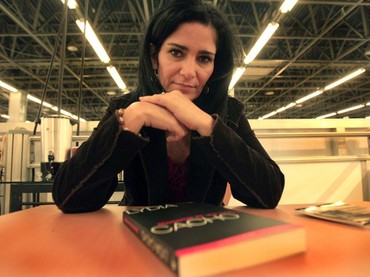
Foto: Informador.com.mx
El Comité para la Protección de Periodistas se manifestó sobre las nuevas amenazas de muerte que la periodista y defensora de derechos humanos Lydia Cacho recibió el pasado 28 de julio debido a su labor informativa.
El CPJ pidió a las autoridades mexicanas investigar esta nueva amenaza y solicitó protección para la periodista, señaló el diario El Informador.
Cacho se encontraba escribiendo en su estudio cuando recibió la advertencia: “No te metas con nosotros o te vamos a mandar a casa en pedacitos”.
El mensaje fue filtrado a través del sistema de radiocomunicación instalado en su casa en Cancún, informó la organización.
La Comisión Interamericana de Derechos Humanos (CIDH), en 2009, otorgó medidas cautelares a la periodista tras darse a conocer varios actos de vigilancia e intimidación por parte de hombres armados.
Article19 también hizo un llamado al Estado mexicano para que se hagan efectivas las medidas dispuestas por la CIDH para proteger a la periodista.
Según Article 19, Lydia Cacho ya se encuentra a salvo fuera de la ciudad de Cancún.
-----------------------------------------------------------------------------------------------
Apart from highlighting the power of social media this news piece is just one amongst many that demonstrates the normalisation of violence in Mexican society. Sometimes I find it difficult to write about direct violence in Mexico and/or in Chiapas more specifically because I worry about being complicit to a polemic that can have negative results and stereotype a nation.
Although I am always aware of what can happen and have evidenced some violent and dramatic scenes during my time in Mexico, I have experienced love, community solidarity, trust and respect on just as many levels. I supposed this comes down what I have always written about Mexico - it is a country of mega extremities - when it is good it is amazing and when it is bad it is horrific. At least with that you always know where you are.
The article above is in relation to investigative journalist Lydia Cacho (@lydiacachosi) one of Mexico's most hard working, consistent and brave women who writes about and speaks out for women's rights and anti-corruption.
In brief she was kidnapped by public security and arrested in 2003 for writing articles and later a book called Los Demonios del Edén (The Demons of Eden) which included narratives of abused girls and named men involved in a paedophile ring. In 2006 she published a book on the impunity and femicide in Cuidad Juarez of which she continues to be very vocal today. And now according to reports she is being threatened again by not so brave cobardes who shout anonymous threats from hidden places.
The suspected involvement of local politicians and security forces on previous violations of her human rights to live unharmed and peacefully as any other citizen of the world must make it difficult to know who to trust. My ears always prick up at the mention these stories of journalists in danger in Mexico as this is the career my husband once chose, for which he too received threats and witnessed corruption on a regular basis - albeit on a smaller scale. I remember the BBC once reporting that Mexico was second to Iraq in being the most dangerous place in the world to be a journalist, I remember it most vividly because at that time I was back in the UK fearing that I might never see my life partner again. He lost faith in the world of journalism because of his junior experience and vowed never to return to it. It appears that as with everything in that amazingly, dramatic and lively country you are left to choose between extremes - be part of the corruption that only prints what the politicians and high end society tell you to or stand against it and have you and your family receive regular death threats and at worst be murdered.
I wrote and presented a paper at the end of 2011 about gendered violence and reproductive healthcare in Chiapas. In this paper I began to explore the notion of how high levels of violence in society reflected not high levels of structural violence but direct violence in reproductive healthcare settings. This was followed up earlier this year by another paper presented on Barcelona and a following article (all published in edited versions on this blog) on the impact of militarisation on gendered violence and reproductive health.
As disturbing as continued reports of violence, impunity and corruption in Mexico are in the world media are, they serve to remind me that hopefully I am not alone in thinking that part (though not all) of the catalysts behind the poor treatment of women during pregnancy and labour, and in health services in general, are connected to the wider violent actions (and acceptance) of a society.
A more important reason personally to pay attention to violence in Mexico, without sensationalising and demonising a nation is precisely because my extended family, children, friends and strangers that I have experience of cannot be further (in the extreme) from this phenomenon.
Sunday, 22 July 2012
Reviewing writings from the Past
Prompted by a recent Twitter thread I have published an edited version of my MA thesis on this blog (http://letterfromchiapas.blogspot.co.uk/p/archive-ma-writings-on-gender-and.html and also as a note on https://www.facebook.com/LetterFromChiapasBlog).
I wrote the original thesis entitled : Multiple Gender Identities of the Isthmus Zapotec and the Transition of the Household into a Neoliberal Mexico back in 2006. As well as the submission for my MA in Social Anthropology is was also intended as the project for my first attempt at gaining a PhD (which turned into a major disaster but that's for another time and place!).
Re-reading, editing and re-posting sections of this thesis has presented me with some opportunity for reflection. The original tweet thread from @icdad and @ThinkMexican reminded me of the months of thinking, reading and writing about the complexities of gender and sexuality constructions in Latin America I had done, that now seem a distant past. Just what happens to all that stuff we learn in our early academic and educational journey? Does it just get compartmentalised, archived in the memory banks until prompted by an external force to come to the fore again?
I wrote the original thesis entitled : Multiple Gender Identities of the Isthmus Zapotec and the Transition of the Household into a Neoliberal Mexico back in 2006. As well as the submission for my MA in Social Anthropology is was also intended as the project for my first attempt at gaining a PhD (which turned into a major disaster but that's for another time and place!).
 |
| Photo from http://www.azull.com |
Surely on many levels this previous knowledge hoard must inform my thinking and understanding of the world today? I just don't spend much time reflecting upon it.... I now realise that is a shame.
As well as a reminder of my first in depth anthropological thinking into gender and economy, reading this thesis has demonstrated en evolution in my writing. It's difficult to read academic work from the past, it makes me cringe - I admit to never revisiting my undergrad assignments - I don't think I have the stomach for it! Opinions and ideas without much substance is a polite way to describe my undergrad self... What I would probably now write on my own student's feedback as "This discussion has some potential, however..."
I think perhaps its a good idea to have a reunion with my past self every now again, catch up with how I arrived at my current state of being and maybe learn a few things about where I'm going!
Monday, 15 August 2011
La Dignidad Rebelde?

"For many in Mexico today the world seems, indeed to have gone mad. It is a world where politicians funnel eighty four million dollars from the national coffers into Swiss bank accounts, where protesters sew their mouths closed with black nylon string in politically motivated hunger strikes, where students take to the streets in angry riots, and where policemen slaughter dozens of campesinos and hide their bodies in shallow graves. Divorces and homicides are up, literacy rates and education down, and so many young people seem more engaged with what's happening in Friends than in their own back yards"
R. Lester, 2005
Since the early 1980’s a slow, yet steady rebellion has been taking place throughout Los Altos of Chiapas, the body count of indigenous women, children and men as a result of supporting this rebellion or just being in the wrong place at the wrong time has crossed into 4 figures. Political prisoners are into the hundreds and Chiapas remains a militarized state away from the media gaze. Just like the recent public uprising and rioting in various countries, the Zapatista movement only made the world press when they appeared armed and used violence (whether symbolic or physical) to get their message across. Since they put down their arms to continue in a non-violent struggle in the face of an uber-violent State one has to search them out to find them in terms of media coverage.
Chiapas remains within the top 5 most marginalized states of Mexico, alongside neighbouring Oaxaca it has a high indigenous population, is rich in natural resources and has an inconceivably huge class and racial divide resulting in a burgeoning middle class who appear apathetic to the abject poverty and starvation that surrounds them.
My experience of this place over eight years has taught me that an imagined vision (and language) of a 1st and 3rd world (who ever got to be the 2nd??), is nothing but a constructed concept. Break these concepts down and what do they mean any way? Perhaps just another label imposed by powerful governments to say “you are down there, and there you will stay”?... after all has anyone heard of a country that gets relegated to 3rd or upgraded to 1st?

What does poverty mean when you have no running water or electricity but you have a mobile phone and cable tv??
The force known to many as neoliberalism no longer has a distinct definition, not one that can be easily fitted into a sentence and applied willy nilly to any situation. It is better to think of neoliberalism as a phantom that haunts society and nation at every level. It is a creature that changes, morphs and reinvents so quickly that its hard to know where it will turn up next. Neoliberalism seeps into every aspect of if social and individual life. It is easy to look at the large scale political and economic actions that are rooted in the free market philosophy of survival of the fittest. The decrease of state funded services, universal benefits and praise of privatisation as the best option are apparent to even the most ignorant of shopping channel souls. The commodification of everything from body parts to feelings – from those breasts that will make you a winner, the designer foetus that grows into a flawless success, to the happiness that can be bought in any shopping centre or online paradise – now that’s a little harder to pin down.
It’s the emotional and cognitive effect on the individual that is intrinsically linked to the collective social world, and vice versa which can only be tackled through theoretical analysis. Perhaps that is why the effects of neoliberal/free market/neo-capitalist forces on the emotional human being defy an understanding in the common world. If you can’t get hold of something, pin it down, give it a name, catch the phantom at work – how does it become part of the general consciousness?
We blame our unhappiness on whatever our media devices tell us is causing it. The strongest will survive, free market mentality tells us that unhappiness is caused by not having enough – it doesn’t matter what of, you just don’t have enough of it. This translates into the individual a feeling of never quite getting there, never being satisfied and always wanting better. Those who commodify the phenomena of health will tell us that this is depression, a chemical imbalance and that there’s a pill that can fix it and a good therapy or holistic religion for those that can afford it. Your diagnosis can then be traded to earn particular benefits and acceptance in the world you live in.
Pedagogic theorist Peter Mclaren writes that our feelings are attached to the shimmering surface effects of signs and simulations, and the dull radiance that illuminates the spectacles of everyday. In other words, our feelings have been made external in order that we may recognise them only as emotions accepted by a particular society, at a particular time. This separation between internal and external feelings leads to social confusion. When there only exists a language to explain the socially constructed external emotions we receive on a superficial level, our profound internal emotions are alien to us, we have no way to explain them to ourselves and therefore no understanding of how we should react. As social and emotional beings we do react, and do so in an automatic sense, in ways that seem irrational and violent precisely because there is no other way to understand action that has no constructed meaning. We have lost all ability to recognise our internal repulsion and coping mechanisms to the world around us.
Whether it is Mexico, Egypt, Spain or the UK the world seems to be a mad place for no one dominant reason in particular. Perhaps the phantom neoliberal effect on the individual via the fetishism of commodification has reached its limits of subtlety, and the world is finally waking up to the madness it has caused. No longer can a shimmering surface effect explain away the levels of inequality and injustice that exist in the one world we all live in.
Friday, 21 November 2008
Write or Wrong

Wow.. we've moved house for the third time in 18months, this time hopefully we can stay where we are. Its cheaper, smaller, easier to keep clean, on the side of a hill and currently when its hitting 5 degrees celsius outside a house with a tin roof is bloody freezing!! Thank heavens for hotwater bottles and brothers who bring them over. We've yet to gain the luxury of an inside loo, but with a view of half the city and surrounding mountains thrown in i can live without a warm seat in the morning.
The house is also about two blocks away from our fav cafe, which is great from a buying coffee and chocolate perspective and also the fact that they love hugging Emilia and take her off my hands for half an hour when i pop in for a brew.
The people that own the cafe have been ace since we moved here, always giving us a slice of free cake when we celebrate something and its good to have a mummy winge to the owners wife, somehow i don't feel so guilty when its another mum who has just as many problems as well, i feel it's allowed to complain. Anyhooo.. i was chatting to the girl Mari behind the counter and talking about school, her younger sister works in the cafe and i noticed she is of school age (13yrs), Mari told me she simply wasn't interested in school so she didn't go, when i asked if she could read and write she replied "more or less". In a country where its not compulsory to be educated attitudes to education differ greatly, especially where girls are concerned. It made me ponder.... What is education? Where and how do we really receive it? Who sets the agenda?
A woman once said to me that she thought young people should be removed from school at the beginning of adolescence and put to work until 18 when they may have an interest in actually learning something, although a generally sweeping statement with my own experience of working with 'da' yut' both here and in England, and Arturo's recent work as a high school teacher i am very tempted to agree. As a mum, i'm not quite sure of my position, i feel maybe Emilia will learn more at home and from her world outside than any education institution. Lets face it, if she were in England the teachers would be so busy filling in ofsted paperwork that they wouldn't have time to teach her anything, and here in Mexico, well considering about 80% of qualified teachers recentely failed a govt. basic skills exam, i'm not sure what she's due to learn!!
After the reading, writing and 'rithmatic bit what do we actually get from the system? Disregarding the questionable social skills and community conforming....
Culturally speaking education around the world; actually i change that to school rather than education as the two are argubly very different things. School around the world tends have basically the same set up due to countless imperialism of the leading nations ooooohhh many years ago, not accounting for the different lives children and young people around the world lead everyday. If you are a child or young person that works to support either yourself or your family, what subjects do you really need? What has life taught you that a text book can't? The math skills of any child i've ever met selling in the market or street can match that of any British GCSE student (do GSCE's still exist?). And the parerenting, cooking, DIY and farming skills of any child or young person supporting siblings can never be taught in a classroom, what use have these young people to learn about the position of the moon, basic chemistry or food technology??? I'm not saying that the right to 'school' should be denied to anybody, in any place. I just wonder whether the schooling in place is actually of any use or it just makes western governments and developing charities feel like they're doing some good in far flung places.
Whe Mari and her sister can read, write, run a small business feed and cloth themselves what use would a archaic secondary education be?
I myself have no high school qualifications more than 3 gcse's (university career not withstanding), my dad (love you dad) has even less, my mum, nan and women of my family all write beautifully and live with the hidden wisdom of all great women not certificates.... and yet we and most of all the other people who have positively effected my life are amongst the most intelligent, strong and sensible people i know!!
Monday, 6 October 2008
God Makes Nappies (apparently)
We had a visit from the inlaws at the weekend, they had been up late listening to evangelical radio and my mother in law was ready to roll. I counted at least 4 god bless yous as they walked through the door and whilst changing Emilia's nappy i was informed that i was using the best that harms nobody, as god makes cloth nappies, and apparently everything else in the world. Making me think that it must make disposables as well and is therefore ruining its own world creation. I managed to bite my lip as usual, oooh so tempting but motherhood seems to have mellowed me somewhat.
She also promised to send along some informative pamphlets on the next visit, aparently i need to be saved.... i'm thinking of getting myself, husband and baby shaved heads and buddist outfits, or maybe we should just move!
She also promised to send along some informative pamphlets on the next visit, aparently i need to be saved.... i'm thinking of getting myself, husband and baby shaved heads and buddist outfits, or maybe we should just move!
Subscribe to:
Posts (Atom)