Pages

Saturday, 6 April 2013

Motherhood in the Field: "Mummy I want to go home"....

Coming up to about a month of our 10 month residence in the ethnographic field and last night I heard the words I have been dreading "Mummy I don't want to be in Mexico any more, I want to go home". If anything I'm surprised it took this long, though my eldest has always been sensitive to what's going on around her and is not likely to blurt this out at any given moment. I have to say I envy a child's ability to be honest with themselves and those surrounding them, in reality she was only echoing what I have often felt on the inside during this first month.


So far we have had arguments with landlords and house moves, infestations of head lice, regretful, unplanned trips to the jungle (long story!), occasional vomiting, over tiredness, insomnia and a spattering of general wobbling of confidence in what I'm here to achieve - and that's just me!

Having been witness to all this and only once have uttered the 'going home' words, (which to add context were said as an over-tired, outplayed four year old was refusing to put her own pyjamas on) before promptly falling fast asleep, has actually left me feeling immensely proud of eldest daughter and amazed at her adaptation skills.After spending a sleepless night worrying about my response/plan to these dreaded words, there was no mention of it the next morning as she happily chatted on about her plans for play that day.   She appears to be coping with this whole fieldwork thing much better then me! 

A positive house move to a neighbourhood where other children are at hand to play with and impending starting of pre-school have certainly helped smooth over this initial period. From my workload point of view it also allows me to stop pressurising myself into intense data collection as I will very soon have a short period of 5 child free hours a day to occupy myself with and a more defined 'work day'. I've never been a outspoken fan of routine, however, bringing a child into the field has forced me to have a structured routine that is beneficial to data collection. 

Pregnant belly and chatty four year old are also proving beneficial in the legitimising myself in surroundings and with informants arena. It's become quite useful when attached daughter begins most conversations for you, being an apprentice in the field one has much to learn about how children engage strangers in conversation and abstract useful information. So much so I'm beginning to wonder whether I can continue in her absence whilst she's at school!!

On a poignant note, coming to observe motherhood in a place where motherhood is everywhere  and in most aspects a very social event. Where women  work with babies or small children attached to them, where daily tasks are carried out and life goes on without a severe separation of activity and mothering spaces it allows me to reflect upon the fact that I have half my child stock here with me and will continue to do whilst I work and study for a doctorate degree. If anything, I am questioned here as to why I would leave another child behind - quite different to the conversations I had in the UK about why I would possibly want to bring a child with me.

The emotional strain of leaving one child behind was something that I expected to struggle with, though it appears, as with my daughter that my son is adapting quite well to my skype presence and seemingly a less outwardly affected than I at our separation. The next challenge will be when we all come together in month's time and then have to separate again - with the addition of a new baby. The fear of not knowing how this will all pan out is driving my data collection each day and helping me maintain focus. I do wonder that without this added pressure what stage I would currently be at now...probably still looking for a cheaper, more comfortable house!


Monday, 11 March 2013

motherhood in the field: Separation and Arrival


The challenge has begun (on a matter of principle I refuse to use the word 'journey'!). In the early hours of this morning my four year old and I waved hasta luego to my husband and three year old son and began our journey to Mexico (aptly we left on mother's day). We will be apart for the next 2 months when they will come over to visit, in time for birthdays and await the birth of our third child. After that we shall become fragmented once more for four months. Already this gives me a deadline to work towards as I try to plan what aspects of fieldwork I can fit in within the next two months, whilst at the same time settling my four year old into her new surroundings, the last trimester of pregnancy and dealing with the temporary separation of our family.

I am aware that this preliminary post is sounding rather balanced and sensible. It must be noted that as I write I am only halfway through travelling to the fieldsite and having set off at some ungodly hour this morning am actually far too tired to think or feel the gravity of the situation. Less than 24 hours since we said our hasta luegos I am yet able to comprehend the emotions of leaving one of my children and partner behind.

I received some interesting comments and tweets after my last post relating to the topic of parenthood in the field and the work/motherhood balance in general. A consensus amongst many was the idea that fieldwork could/should be done for short periods and that finding a time to parent would be difficult. This did make me reflect on the perspective of my children and how appropriate it was to bring them into the field, but this was constantly outweighed by the acceptance of my chosen discipline of anthropology and desire to complete an in depth ethnography of my subject in question. Although compromise is the key to most things in life (most definitely concerning parenthood!) I am quite confident in defending the point that my field data would itself be compromised (and not in a positive way) if I didn't commit to a substantialy lengthy period. Wanting to understand pregnant and maternal subjectivities at least deserves one to be around for the gestation of the phenomenon. A field context is important here, my acompanying child and growing fetus are along for the ride for various practical (and biological) reasons. I want to understand motherhood and pregnant bodies in a Mexican context so I don't see too much problem with bringing my own bodily accessories into the fieldsite. Who knows, it may even result in an advantage...I'm sure my children will be the judge of that!


Tuesday, 26 February 2013

Motherhood in the Field : a new thread

I am about to embark on a years worth of anthropological fieldwork into social pregnancy and maternal subjectivities. It is my aim to spend the next 10 months 'hanging out' with pregnant women and their families, midwives and other health professionals and generally anyone who can stand my presence and questions for a long period of time!

In preparation for the field I have learnt much about interview techniques, fading into the background (or not!), the effect of the researcher on the fieldsite, best way to take notes etc. but little about the specific aspects of my own life that cannot be suspended in animation whilst I go about my field life. 

MOST NOTABLY MY FAMILY...

I have found noted in odd ethnographies and papers where anthropologists have noted the presence of their children (Sheper-Hughes in Death Without Weeping, Gutmann in The Meanings  of Macho), some reflections/mentions of pregnancy in the field (Rapp in Testing Women, Testing the Fetus , Ivry in Embodying Culture) and nothing so far on leaving one's small children behind to go into the field (though I am happy to stand corrected). I have come to conclusion that like much ethnographic fieldwork mysteries it must come to to initiation and guarded experience. Arguably if ethnography is to be a reflexive practice there needs to be a space for discussing such experience - it is either woefully lacking or I have failed to find it. 

I have decided to treat my posts here over the next year as a thread for my field experience and its clashes/coincidences with motherhood. This way such reflections may stay out of my confidential field notes and I will have a space to reflect upon myself and hopefully open up a discussion space for all parent anthropologists to contribute. 

OVER THE NEXT YEAR I SHALL EXPERIENCE THE FOLLOWING (in my personal life as mum, wife and woman): Being accompanied in the field by a small child; leaving another small child and husband at home for the duration; being pregnant with third child; birthing said third child and continuing in the field. 

Have I gone mad?? Is a question on the lips of many..Is it ethical/moral to separate one's young family in the name of fieldwork and what right do I have to do so? I have been asked and have asked myself many of the same and similar questions HOWEVER, as is the concern of many a fledgling academic - as much as I love to theorise about the cultural construction of the human body, my womb does have a shelf life; women have to fight hard in academia to achieve their goals and qualifications; I live under the illusion that if we can't have it all we can at least try; although I struggle to find published evidence I surely am not the first woman (or parent) to be in this situation.

Crash, burn or be successful...only experience will prove my resilience and that of my family!

Wednesday, 23 January 2013

Why I understand my Pregnancy and Birth Choices as Political Action


Whether by nature or by constructive design I am a feminist in every way that I understand feminism to mean. Whilst I happily debate with many and often myself about the historical inclusionary, exclusionary and culturally specific aspects of feminist thinking, I have always stood in agreement with one traditional argument – there is no separation between the personal and the political, my personal is public and everything about it is intensely political.


It all comes down to the intriguing concept of ‘choice’, I am never one to take semantics lightly particularly concerning this word and its array of meanings in the English language. The moment I make a choice I am practicing conscious action based upon my political beliefs and feelings as a woman, in whatever environment I am in at that time. I am fully aware that such choice making is a privilege given to me by my social position and geographical location in the world, dependent upon my access to varied knowledge sources, freedom to act and speak without physical or legal repression and the influence of the hundreds of women dead, alive and yet to be born whom I take inspiration from.


Knowledge (or stuff and info), lived experience and emotional memory drive the choices I make; I would admit the latter dominates whether consciously or not. It has taken until my third pregnancy to reflect upon the politics in my personal reproductive choices and behaviour and until now to construct the confidence needed to defend myself against a status quo of a medicalised appropriation of women's bodies.


At 36, female bodily experience and the immense surge of power I feel when with foetus has finally led me to be proud, confident and happy about the choices I am making for the life of my womb and its contents, due to physically separate at birth. My studies have led me recently into the realms of foetal subjectivities that are at once fascinating and mind blowing. I have become seduced by the writings of French philosopher Julia Kristeva who attempts to find ways of explaining what may or may not begin in the womb, from the moment of conception: or what she so eloquently names the semiotic chora – the poetry of the pre-lingual. I find it nourishing to think about how my actions now may impact on the formation of the new human currently growing from my body, I also love the ideas of social scientist Barbara Duden who writes in her book Disembodying Women of the foetus as an astronaut who travels the length of the female body, influencing every aspect of it and societies claims upon its vessel. It is this literature that reminds me every day that choice is political practice and should never be taken for granted.


I am proud to say that I have denied registering my pregnancy with my GP and state maternity care; I have researched and hired an independent midwife who pops by only upon my request and chats without laying a finger on my body and who trusts me to know my own body; I have chosen no external interventions such as ultrasound, urine and blood testing; I am returning to the place and people where I feel emotionally drawn to birth; and most importantly I am taking full responsibility for my pregnancy and birth decisions because I choose to do so including any consequences that come along with that responsibility.

I understand my decisions as no better or worse than any other pregnant woman, I am doing what I feel is the correct, political thing to do based upon who I am and how I understand it is to be a woman. Even in the most life affirming, sensitive, beautiful and painful moments of my life I cannot deny that politics creates the situation I and my children are in. 

Thursday, 4 October 2012

No you can't choose your midwife but you can choose a caesarean!

If I were to explain that within six months you would no longer be able to choose a midwife who you and you family could build up a relationship with over 9 months, have a home birth without uniforms and bizzare multi-presence protocol and not be pressured into sonograms you don't need and a birth plan that has your wishes at the centre, you may wonder: "Did I ever have this choice in the first place?" ...

Yes, it is actually possible to birth outside of the NHS and no they didn't invent it! There has always been this choice in the UK, independent midwives (IMs) have worked before, during and after the NHS and state manipulation of midwifery and have provided individual woman centred care for ..well I could say centuries, but to be more exact since time began! Women have always had the option to opt-out of the system and hire (its not as expensive as you would think and therefore not just the reserve of the middle classes as is it is often viewed) a woman to support them during the pregnancy, birth and post natal period. IMs have lovingly dealt with all aspects of fear, trauma, post-natal depression etc. and do so by providing as much time as you need, not a 5 minute slot in an over-run surgery. 

Until now that is, independent midwifery (IM) in the UK has been serious threat for around 5 years or so. I won't go into the legislative attack on IMs in this post, much better detail can be found by clicking in this link and also a brief search on the net. But lets say in short that by 2013, unless they work for a supporting company who can provide funding for exorbitant insurance fees rising over the price that any individual could afford (around £80,000 and rising) then its bye bye birthing practice. Their only choice (ahem!) is to join the ranks of the uniformed NHS and do it their way. Nice strategy government body people to populate a dwindling NHS profession - force IMs into your service!! Without that IMs can work as doulas, a noble art and invaluable role to all women and families - but invaluable as support to woman and midwife. It's basically saying "look we know you're qualified, have many years of experience and are more caring than any nameless institutional drone will ever be BUT you just have to watch and you don't get to say when!" Strangely enough a bit like NHS midwives when an obstetrician enters the labour room!

Now before I get too carried away, I wanted to write this post not so much from my usual activist and anthropologist view (although they'll get in there somewhere!), but from a woman and mother's point of view. I write a lot about the problems in Chiapas and Mexico and feel strongly about the treatment of women there, however, I also take great pride in having lived there, married there and started my family there - with the subjective freedom to search out and identify the support and services that I needed. I gave birth to my second child in the UK and although there are just as many stories to the contrary as to support mine - I NEVER WOULD AGAIN if left to the mercy of a public system that has no respect for the divine wisdom and magic of original midwifery. No matter where I am in the world as a woman I know my own body and I know its limits. As a mother I trust in myself and my baby to find our way through together and to listen to what we are thinking/feeling/doing. Whether in a challenged, post-colonial economy or a fucked up British one I feel it should the right of any woman to seek her own education about reproduction, birth, abortion and make her own decisions about what happens with her own body. It should be the right of any woman to birth the next generation in a safe environment with those she loves and respects close by and no stranger touching her who doesn't even bother to ask her, her name. 

The current system in the UK is striving to offer women more choice (ahem!) birthing centres next to hospitals, elective caesarean, perhaps a home birth if you, your baby, your home meet the criteria. Whilst activists for reproductive rights are fighting for the right to choose (ahem!) interventions and surgery on the basis that no-one should suffer in modern day (without considering that if most pregnancies and births are taken out of a pathological model and medical birthing environment the 'suffering' would not so much be an issue).

So reading between the political spin and woeful lack of media coverage (as expected on women's health issues) you can shortly feel free to elect for surgical interventions that can lead to long term complications, problems with breast feeding, institutional challenges to follow-up vaginal birth, drugs in yours and your baby's system a big fat scar and an obstetrician who doesn't know your name but may charge you a small fortune when they eventually kill off maternity services from the NHS. BUT YOU CAN NOT FEEL FREE TO choose whom you wish to attend you based on whether you like their personality and approach to pregnancy, get to know your midwife and they you and your family over 9 months, decide where you really want to bring your baby into the world and receive support that enables you to feel empowered and in control of your reproductive destiny so that suffering is not a concept (managing pain yes, suffering no). On rare occasions you may fall into an NHS postcode that supports this type of midwifery practice in the system, but that's not a choice (ahem!) its the luck of the draw - lucky you!

Midwives are amazing and many in the system are just as amazing as those outside it, but here in my country of origin I don't get to decide any more which one I want to allow into the most personal, naked, precious moment of my life and I am no longer able to say please don't put your fingers inside my vagina stranger person as I do not wish to have an internal examination if you show me I can do it myself......quite frankly that sucks!

Wednesday, 1 August 2012

Death Threats, State Violence = Bad Reproductive Health Care


My response to this short  online news piece in relation to violent societies appears below in English:

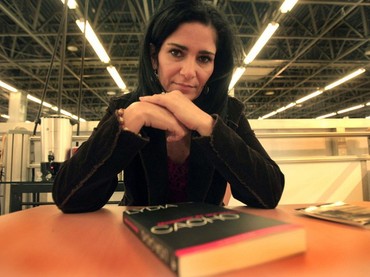
México: Exigen protección para periodista Lydia Cacho


Foto: Informador.com.mx
El Comité para la Protección de Periodistas se manifestó sobre las nuevas amenazas de muerte que la periodista y defensora de derechos humanos Lydia Cacho recibió el pasado 28 de julio debido a su labor informativa.
Cacho se encontraba escribiendo en su estudio cuando recibió la advertencia: “No te metas con nosotros o te vamos a mandar a casa en pedacitos”.
El mensaje fue filtrado a través del sistema de radiocomunicación instalado en su casa en Cancún, informó la organización.
La Comisión Interamericana de Derechos Humanos (CIDH), en 2009, otorgó medidas cautelares a la periodista tras darse a conocer varios actos de vigilancia e intimidación por parte de hombres armados.
Article19 también hizo un llamado al Estado mexicano para que se hagan efectivas  las medidas dispuestas por la CIDH para proteger a la periodista.
Según Article 19, Lydia Cacho ya se encuentra a salvo fuera de la ciudad de Cancún.
-----------------------------------------------------------------------------------------------
Apart from highlighting the power of social media this news piece is just one amongst many that demonstrates the normalisation of violence in Mexican society. Sometimes I find it difficult to write about direct violence in Mexico and/or in Chiapas more specifically because I worry about being complicit to a polemic that can have negative results and stereotype a nation.
Although I am always aware of what can happen and have evidenced some violent and dramatic scenes during my time in Mexico, I have experienced love, community solidarity, trust and respect on just as many levels. I supposed this comes down what I have always written about Mexico - it is a country of mega extremities - when it is good it is amazing and when it is bad it is horrific. At least with that you always know where you are.
The article above is in relation to investigative journalist Lydia Cacho (@lydiacachosi) one of Mexico's most hard working, consistent and brave women who writes about and speaks out for women's rights and anti-corruption. 
In brief she was kidnapped by public security and arrested in 2003 for writing articles and later a book called Los Demonios del Edén (The Demons of Eden) which included narratives of abused girls and named men involved in a paedophile ring. In 2006 she published a book on the impunity and femicide in Cuidad Juarez of which she continues to be very vocal today. And now according to reports she is being threatened again by not so brave cobardes who shout anonymous threats from hidden places. 
The suspected involvement of local politicians and security forces on previous violations of her human rights to live unharmed and peacefully as any other citizen of the world must make it difficult to know who to trust. My ears always prick up at the mention these stories of journalists in danger in Mexico as this is the career my husband once chose, for which he too received threats and witnessed corruption on a regular basis - albeit on a smaller scale. I remember the BBC once reporting that Mexico was second to Iraq in being the most dangerous place in the world to be a journalist, I remember it most vividly because at that time I was back in the UK fearing that I might never see my life partner again. He lost faith in the world of journalism because of his junior experience and vowed never to return to it. It appears that as with everything in that amazingly, dramatic and lively country you are left to choose between extremes - be part of the corruption that only prints what the politicians and high end society tell you to or stand against it and have you and your family receive regular death threats and at worst be murdered.
I wrote and presented a paper at the end of 2011 about gendered violence and reproductive healthcare in Chiapas. In this paper I began to explore the notion of how high levels of violence in society reflected not high levels of structural violence but direct violence in reproductive healthcare settings. This was followed up earlier this year by another paper presented on Barcelona and a following article  (all published in edited versions on this blog) on the impact of militarisation on gendered violence and reproductive health. 
As disturbing as continued reports of violence, impunity and corruption in Mexico are in the world media are, they serve to remind me that hopefully I am not alone in thinking that part (though not all) of the catalysts behind the poor treatment of women during pregnancy and labour, and in health services in general, are connected to the wider violent actions (and acceptance) of a society. 
A more important reason personally to pay attention to violence in Mexico, without sensationalising and demonising a nation is precisely because my extended family, children, friends and strangers that I have experience of cannot be further (in the extreme) from this phenomenon. 

Sunday, 22 July 2012

Reviewing writings from the Past

Prompted by a recent Twitter thread I have published an edited version of my MA thesis on this blog (http://letterfromchiapas.blogspot.co.uk/p/archive-ma-writings-on-gender-and.html and also as a note on https://www.facebook.com/LetterFromChiapasBlog).

I wrote the original thesis entitled : Multiple Gender Identities of the Isthmus Zapotec and the Transition of the Household into a Neoliberal Mexico back in 2006. As well as the submission for my MA in Social Anthropology is was also intended as the project for my first attempt at gaining a PhD (which turned into a major disaster but that's for another time and place!).

Photo from  http://www.azull.com
Re-reading, editing and re-posting sections of this thesis has presented me with some opportunity for reflection. The original tweet thread from @icdad and @ThinkMexican reminded me of the months of thinking, reading and writing about the complexities of gender and sexuality constructions in Latin America I had done, that now seem a distant past. Just what happens to all that stuff we learn in our early academic and educational journey? Does it just get compartmentalised, archived in the memory banks until prompted by an external force to come to the fore again? 

Surely on many levels this previous knowledge hoard must inform my thinking and understanding of the world today? I just don't spend much time reflecting upon it.... I now realise that is a shame.

As well as a reminder of my first in depth anthropological thinking into gender and economy, reading this thesis has demonstrated en evolution in my writing. It's difficult to read academic work from the past, it makes me cringe - I admit to never revisiting my undergrad assignments - I don't think I have the stomach for it! Opinions and ideas without much substance is a polite way to describe my undergrad self... What I would probably now write on my own student's feedback as "This discussion has some potential, however..."


I think perhaps its a good idea to have a reunion with my past self every now again, catch up with how I arrived at my current state of being and maybe learn a few things about where I'm going!