Pages

Showing posts with label women. Show all posts

Wednesday, 1 August 2012

Death Threats, State Violence = Bad Reproductive Health Care


My response to this short  online news piece in relation to violent societies appears below in English:

México: Exigen protección para periodista Lydia Cacho
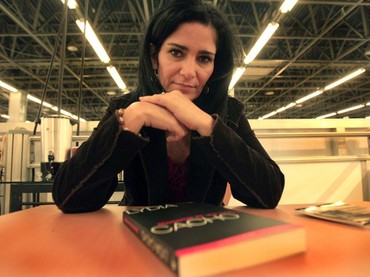

Foto: Informador.com.mx
El Comité para la Protección de Periodistas se manifestó sobre las nuevas amenazas de muerte que la periodista y defensora de derechos humanos Lydia Cacho recibió el pasado 28 de julio debido a su labor informativa.
Cacho se encontraba escribiendo en su estudio cuando recibió la advertencia: “No te metas con nosotros o te vamos a mandar a casa en pedacitos”.
El mensaje fue filtrado a través del sistema de radiocomunicación instalado en su casa en Cancún, informó la organización.
La Comisión Interamericana de Derechos Humanos (CIDH), en 2009, otorgó medidas cautelares a la periodista tras darse a conocer varios actos de vigilancia e intimidación por parte de hombres armados.
Article19 también hizo un llamado al Estado mexicano para que se hagan efectivas  las medidas dispuestas por la CIDH para proteger a la periodista.
Según Article 19, Lydia Cacho ya se encuentra a salvo fuera de la ciudad de Cancún.
-----------------------------------------------------------------------------------------------
Apart from highlighting the power of social media this news piece is just one amongst many that demonstrates the normalisation of violence in Mexican society. Sometimes I find it difficult to write about direct violence in Mexico and/or in Chiapas more specifically because I worry about being complicit to a polemic that can have negative results and stereotype a nation.
Although I am always aware of what can happen and have evidenced some violent and dramatic scenes during my time in Mexico, I have experienced love, community solidarity, trust and respect on just as many levels. I supposed this comes down what I have always written about Mexico - it is a country of mega extremities - when it is good it is amazing and when it is bad it is horrific. At least with that you always know where you are.
The article above is in relation to investigative journalist Lydia Cacho (@lydiacachosi) one of Mexico's most hard working, consistent and brave women who writes about and speaks out for women's rights and anti-corruption. 
In brief she was kidnapped by public security and arrested in 2003 for writing articles and later a book called Los Demonios del Edén (The Demons of Eden) which included narratives of abused girls and named men involved in a paedophile ring. In 2006 she published a book on the impunity and femicide in Cuidad Juarez of which she continues to be very vocal today. And now according to reports she is being threatened again by not so brave cobardes who shout anonymous threats from hidden places. 
The suspected involvement of local politicians and security forces on previous violations of her human rights to live unharmed and peacefully as any other citizen of the world must make it difficult to know who to trust. My ears always prick up at the mention these stories of journalists in danger in Mexico as this is the career my husband once chose, for which he too received threats and witnessed corruption on a regular basis - albeit on a smaller scale. I remember the BBC once reporting that Mexico was second to Iraq in being the most dangerous place in the world to be a journalist, I remember it most vividly because at that time I was back in the UK fearing that I might never see my life partner again. He lost faith in the world of journalism because of his junior experience and vowed never to return to it. It appears that as with everything in that amazingly, dramatic and lively country you are left to choose between extremes - be part of the corruption that only prints what the politicians and high end society tell you to or stand against it and have you and your family receive regular death threats and at worst be murdered.
I wrote and presented a paper at the end of 2011 about gendered violence and reproductive healthcare in Chiapas. In this paper I began to explore the notion of how high levels of violence in society reflected not high levels of structural violence but direct violence in reproductive healthcare settings. This was followed up earlier this year by another paper presented on Barcelona and a following article  (all published in edited versions on this blog) on the impact of militarisation on gendered violence and reproductive health. 
As disturbing as continued reports of violence, impunity and corruption in Mexico are in the world media are, they serve to remind me that hopefully I am not alone in thinking that part (though not all) of the catalysts behind the poor treatment of women during pregnancy and labour, and in health services in general, are connected to the wider violent actions (and acceptance) of a society. 
A more important reason personally to pay attention to violence in Mexico, without sensationalising and demonising a nation is precisely because my extended family, children, friends and strangers that I have experience of cannot be further (in the extreme) from this phenomenon. 

Sunday, 17 June 2012

Birth Story


 BIRTH STORY: Ina May Gaskin and The Farm Midwives is racing toward the finish line with finishing costs mounting--seeking women and men who share our enthusiasm for what Ina May and the Farm Midwifery clinic have achieved in the last 40 years; since the 1970s these counterculture heroines have inspired hundreds of thousands of women to believe in their bodies’ natural ability to birth safely and beautifully. Today, with nearly one-third of all U.S. babies delivered via c-section, their knowledge and skills are more needed than ever.


This amazing film project has been put together by two women who describe themselves as "two filmmaking mothers who have been inspired by the important work of world-famous midwife Ina May Gaskin and her incredible colleagues. We've spent the last two and a half years juggling cameras, microphones, hard drives, preschool drop offs, nursing infants, pregnancy, editing schedules, babysitting schedules, American express bills, and vomiting four-year-olds"...


It seems to me that in 2012 we are really racing towards positive change and realisation of just how important respectful birth is and how we treat birth reflects how we are as a society as a whole ... 

Saturday, 16 June 2012

Anthropology contributing to the World...

Here is a link to my latest post and part report on my sister blog from the RAI conference Anthropology in the World Conference in London: http://researchingsecurity.wordpress.com/our-publications/conference-papers/what-can-anthropologists-offer-to-security-studies/ 

I attended a great panel on anthropology's potential in the environment of security studies, this timed perfectly with the paper I've been writing (see previous June post) about the long term effect on conflict in Chiapas and reproductive health services. It also reaffirmed by belief in what ethnographic methods and anthropological theory can contribute to revealing the lived experience of people. Especially when all we get from projected media images are scenes of violence and fear to keep us away. It is often so easy to forget that individuals and families continue to live daily in these environments and continue to have the same food, shelter,water, employment, relationship issues that exist in places of relative peace. Collecting, representing and reflecting upon the stories of others reminds us to look beyond the situation to the people involved in it. 


Monday, 15 August 2011

La Dignidad Rebelde?

"For many in Mexico today the world seems, indeed to have gone mad. It is a world where politicians funnel eighty four million dollars from the national coffers into Swiss bank accounts, where protesters sew their mouths closed with black nylon string in politically motivated hunger strikes, where students take to the streets in angry riots, and where policemen slaughter dozens of campesinos and hide their bodies in shallow graves. Divorces and homicides are up, literacy rates and education down, and so many young people seem more engaged with what's happening in Friends than in their own back yards"

R. Lester, 2005

   Since the early 1980’s a slow, yet steady rebellion has been taking place throughout Los Altos of Chiapas, the body count of indigenous women, children and men as a result of supporting this rebellion or just being in the wrong place at the wrong time has crossed into 4 figures. Political prisoners are into the hundreds and Chiapas remains a militarized state away from the media gaze. Just like the recent public uprising and rioting in various countries, the Zapatista movement only made the world press when they appeared armed and used violence  (whether symbolic or physical) to get their message across. Since they put down their arms to continue in a non-violent struggle in the face of an uber-violent State one has to search them out to find them in terms of media coverage.

Chiapas remains within the top 5 most marginalized states of Mexico, alongside neighbouring Oaxaca it has a high indigenous population, is rich in natural resources and has an inconceivably huge class and racial divide resulting in a burgeoning middle class who appear apathetic to the abject poverty and starvation that surrounds them. 

My experience of this place over eight years has taught me that an imagined vision (and language) of a 1st and 3rd world (who ever got to be the 2nd??), is nothing but a constructed concept. Break these concepts down and what do they mean any way? Perhaps just another label imposed by powerful governments to say “you are down there, and there you will stay”?... after all has anyone heard of a country that gets relegated to 3rd or upgraded to 1st?


What does poverty mean when you have no running water or electricity but you have a mobile phone and cable tv??

The force known to many as neoliberalism no longer has a distinct definition, not one that can be easily fitted into a sentence and applied willy nilly to any situation. It is better to think of neoliberalism as a phantom that haunts society and nation at every level. It is a creature that changes, morphs and reinvents so quickly that its hard to know where it will turn up next. Neoliberalism seeps into every aspect of if social and individual life. It is easy to look at the large scale political and economic actions that are rooted in the free market philosophy of survival of the fittest. The decrease of state funded services, universal benefits and praise of privatisation as the best option are apparent to even the most ignorant of shopping channel souls.  The commodification of everything from body parts to feelings – from those breasts that will make you a winner, the designer foetus that grows into a flawless success, to the happiness that can be bought in any shopping centre or online paradise – now that’s a little harder to pin down.

It’s the emotional and cognitive effect on the individual that is intrinsically linked to the collective social world, and vice versa which can only be tackled through theoretical analysis. Perhaps that is why the effects of neoliberal/free market/neo-capitalist forces on the emotional human being defy an understanding in the common world. If you can’t get hold of something, pin it down, give it a name, catch the phantom at work – how does it become part of the general consciousness?

We blame our unhappiness on whatever our media devices tell us is causing it. The strongest will survive, free market mentality tells us that unhappiness is caused by not having enough – it doesn’t matter what of, you just don’t have enough of it. This translates into the individual a feeling of never quite getting there, never being satisfied and always wanting better. Those who commodify the phenomena of health will tell us that this is depression, a chemical imbalance and that there’s a pill that can fix it and a good therapy or holistic religion for those that can afford it. Your diagnosis can then be traded to earn particular benefits and acceptance in the world you live in. 

Pedagogic theorist Peter Mclaren writes that our feelings are attached to the shimmering surface effects of signs and simulations, and the dull radiance that illuminates the spectacles of everyday. In other words, our feelings have been made external in order that we may recognise them only as emotions accepted by a particular society, at a particular time. This separation between internal and external feelings leads to social confusion. When there only exists a language to explain the socially constructed external emotions we receive on a superficial level, our profound internal emotions are alien to us, we have no way to explain them to ourselves and therefore no understanding of how we should react. As social and emotional beings we do react, and do so in an automatic sense, in ways that seem irrational and violent precisely because there is no other way to understand action that has no constructed meaning. We have lost all ability to recognise our internal repulsion and coping mechanisms to the world around us.


Whether it is Mexico, Egypt, Spain or the UK the world seems to be a mad place for no one dominant reason in particular. Perhaps the phantom neoliberal effect on the individual via the fetishism of commodification has reached its limits of subtlety, and the world is finally waking up to the madness it has caused. No longer can a shimmering surface effect explain away the levels of inequality and injustice that exist in the one world we all live in.